Discover the TOP AI MARKETING HACKS IN 2026 to grow your business fast. Learn AI SEO, authority capture, voice AI, social media automation, AI social listening, and hyper-personalized targeting with step‑by‑step implementation.

TOP AI MARKETING HACKS IN 2026 to Grow Your Business Fast

Discover the TOP AI MARKETING HACKS IN 2026 to grow your business fast. Learn AI SEO, authority capture, voice AI, social media automation, AI social listening, and hyper-personalized targeting with step‑by‑step implementation.

Key Takeaways:

TOP AI MARKETING HACKS IN 2026: How To Grow Your Business Fast

TOP AI MARKETING HACKS IN 2026: How To Grow Your Business Fast

Executive Overview

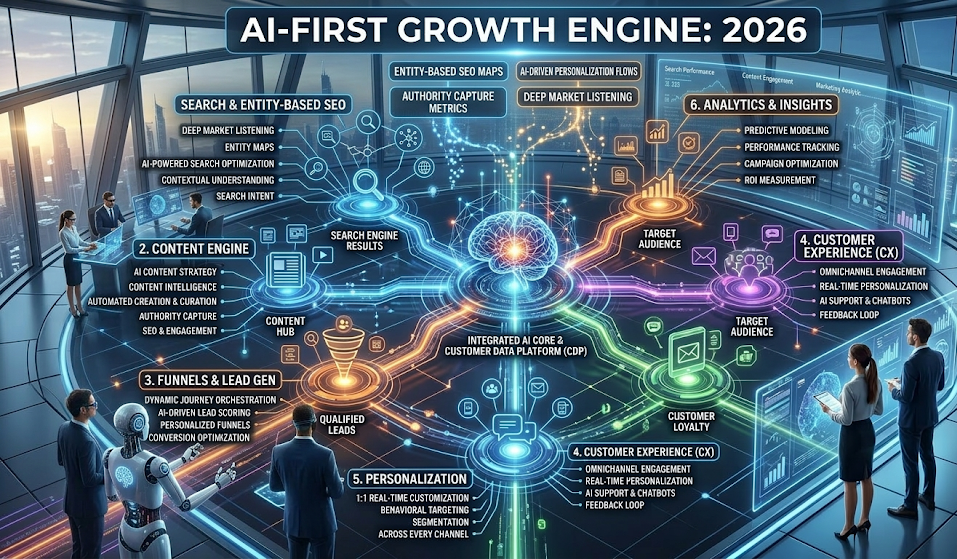
AI marketing in 2026 is no longer just about “using ChatGPT for captions” – it is about building an AI-first growth engine across search, content, funnels, customer experience, and analytics. Brands that win are combining AI automation with deep market listening, entity-based SEO, authority capture, and AI-driven personalization across every channel.

This blog curates the most powerful, actionable ideas from 10 of the most insightful 2025–2026 YouTube videos on AI marketing, SEO, and growth to give you a battle-tested playbook you can deploy this year.

What Makes AI Marketing Different in 2026

What Makes AI Marketing Different in 2026

Search, content, and customer journeys in 2026 are being mediated by large language models (LLMs) like ChatGPT, Gemini, Claude, and AI modes inside Google search. Many product discovery and comparison journeys now happen entirely inside AI interfaces before a user ever lands on a website, which means brands must be visible inside those AI answers, not just in ten blue links.

At the same time, AI tools are giving small teams “unfair leverage” across content creation, ad testing, market research, social scheduling, and lead handling – the marketers who wire these tools into solid strategies are out‑producing larger teams stuck in 2018 workflows.

When you apply the TOP AI MARKETING HACKS IN 2026, you are doing two things at once:

  • Optimizing how AI finds and describes your brand (AI SEO, authority, entities, off‑site signals).
  • Using AI to run your marketing stack faster and smarter (automation, voice AI, social, research, analytics).


The following sections translate these insights into practical, step‑by‑step tactics.

Hack 1 – Dominate AI Search With Entity‑Based SEO

Hack 1 – Dominate AI Search With Entity‑Based SEO

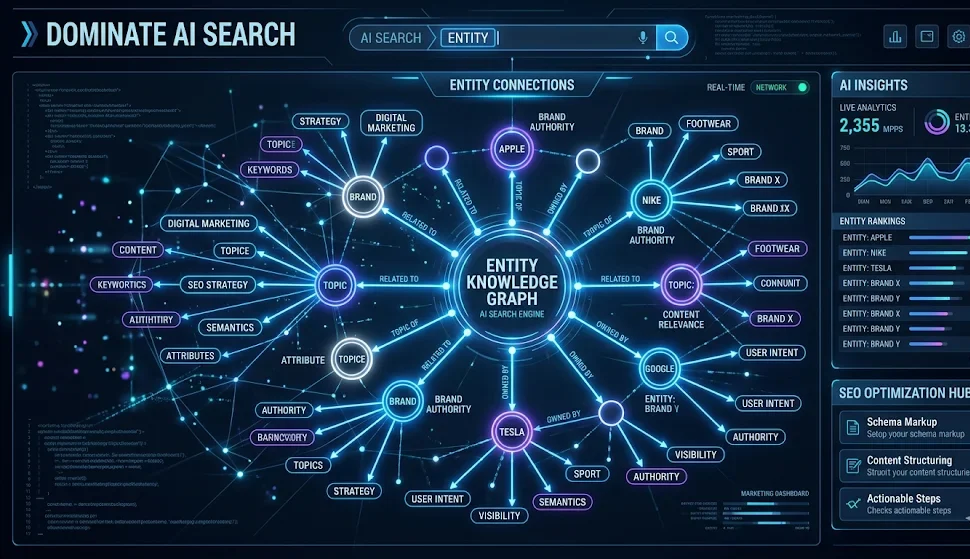
From keywords to entities

In 2026, AI search systems care less about how many times a keyword appears and more about whether you are the clearest, most complete authority on a topic or entity (brand, person, product, problem). StudioHawk’s 2026 SEO playbook shows that instead of obsessing over keyword density, you need topical hubs that cover an entity from every relevant angle, with interlinked subpages.​

How to implement entity‑based SEO:

  • Pick each core topic or offer and create a pillar page – e.g., “Complete Guide To Running Shoes In 2026”.​
  • Build 10–20 support articles around that pillar: use cases, problems, comparisons, FAQs, care, sizing, buyer types, etc., and interlink all of them in a logical hub.
  • Map the key entities in your niche (brands, locations, product types, use cases) and reference them naturally across your content in plain language.​

This structure signals to Google, ChatGPT, Gemini, and Perplexity that your site offers the deepest coverage on that entity, making your content a natural candidate for AI overviews and answer boxes.

    • Use a single‑column layout with no sidebars or complex grids.
    • Use standard section headings like “Summary,” “Work Experience,” “Education,” “Skills,” and “Certifications.”
    • Avoid tables, text boxes, shapes, columns, and graphics for core content because many ATS systems struggle to read them.
    • Keep fonts simple and common: Calibri, Arial, Times New Roman, or similar in 10–12 pt.
    • Place content directly in the body – not in headers, footers, or images – to ensure ATS can parse it.

Use AI tools to speed this up

Goldie SEO’s AI SEO workflow shows how free or low‑cost LLMs like GLM 4.7 and Claude can handle the heavy lifting of topic ideation, draft generation, and content optimization, while you supply strategy and editing.​

Practical steps:

  • Use an AI model to generate long‑tail, question‑style keywords for each entity (e.g., “how to choose running shoes for flat feet”).​
  • Have AI draft first versions of 1,500+ word posts, then manually refine for real experience, specificity, and internal links before publishing.​
  • Use AI again to audit keyword coverage, readability, missing sub‑topics, and semantic phrases – then apply only the changes that improve clarity and depth.​

When done right, this combination of entity hubs plus AI‑augmented writing has taken sites from near‑zero traffic to hundreds of daily organic clicks in under a year, with additional exposure in AI search engines.​

  • Include role‑specific skills, tools, and responsibilities taken directly from the job description.
  • Mirror exact phrasing where appropriate, including both long forms and acronyms (e.g., “Search Engine Optimization (SEO)”).
  • Spread important keywords through the summary, skills section, job titles, and the first bullet under each role.
  • Avoid keyword stuffing; ATS and human reviewers both prefer natural, contextual usage instead of repeated keyword lists.
Hack 2 – Build Real‑World Authority That AI Systems Trust

Hack 2 – Build Real‑World Authority That AI Systems Trust

Why authority beats clever content

In AI search, an average article from a trusted, well‑described entity beats a brilliant article from an anonymous ghost author. AI systems evaluate not just “what does this page say?” but “who is saying it and can they be trusted?”, drawing on signals across your site, social profiles, PR, and reviews.

StudioHawk shows that when sites added real author bios, case studies, and visible proof of expertise, conversion friction dropped—even when rankings looked flat—because humans and AI both gained confidence.​

Authority‑building checklist

  • Author entities: Add detailed author bios with role, years of experience, niche focus, and links to talks, interviews, and social profiles on every major content page.​
  • Case studies: Publish transparent case studies with real numbers, timeframes, and context; reference them inside articles using phrases like “in this campaign we saw…” to inject lived evidence.​
  • Brand mentions: Appear on podcasts, YouTube channels, LinkedIn posts, and niche blogs so your brand name, founder name, and flagship offers show up repeatedly across the web—even when links are not always present.
  • Consistency: Use the same names, photos, and positioning across site, LinkedIn, YouTube, and directories so AI models can resolve them into a single, strong entity.​


The more your name and brand show up as a credible source in independent environments, the more likely AI systems will surface you in generated recommendations and comparisons.

Hack 3 – Write For AI Answers, Not Just Human Clicks

Hack 3 – Write For AI Answers, Not Just Human Clicks

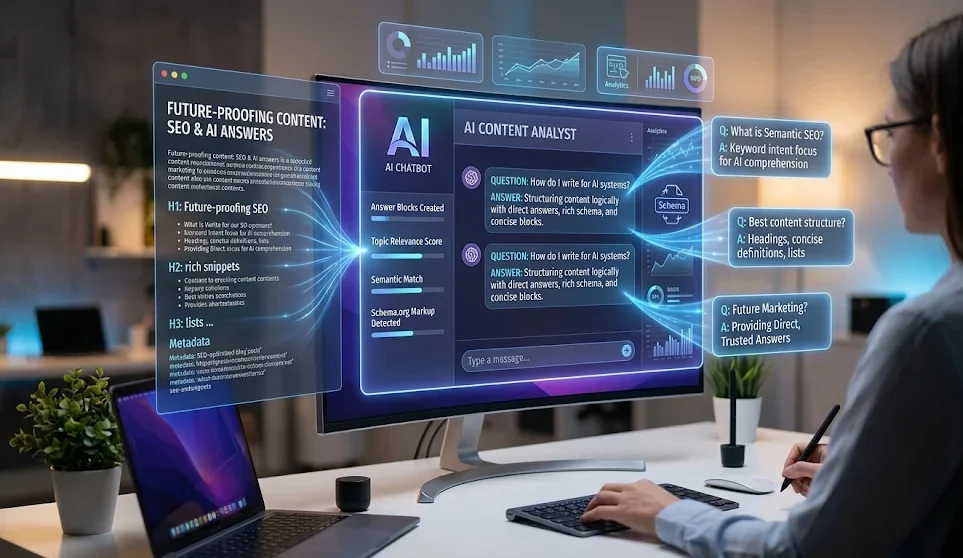
Short, direct answers win AI overviews

When Google’s AI Overview or a tool like Perplexity composes an answer, it prefers paragraphs that look like clear, standalone responses to explicit questions. In a real law‑firm case, long essays lost visibility while short glossary‑style explanations with one‑sentence definitions started winning AI citations and traffic.

To align with this, structure content so every important query has a:

  • Question‑style H2/H3 heading, e.g., “What Are The Best AI Marketing Hacks In 2026 For Small Businesses?”​
  • 1–2 sentence direct answer immediately below the heading, followed by deeper explanation, examples, and tables.​
  • Uses 2–4 lines focused on your role, experience level, and core strengths.
  • Includes your main job title and 3–5 priority keywords from the job description.
  • Highlights measurable impact or specialization instead of vague adjectives.

Example (for a marketing role):

Performance‑driven Digital Marketing Specialist with 5+ years’ experience in SEO, paid ads, and lead generation for B2B brands, skilled in Google Ads, Meta Ads, and analytics‑based optimization.

This structure aligns with ATS best practices for clearly labelled summary sections and integrated keywords.

Use Q&A sections and tables

AI answers lean heavily on factual snippets, lists, and tables that compare options in a structured way. Instead of burying everything in prose, add:​

  • FAQ blocks where each question gets a concise answer before additional context.
  • Comparison tables (e.g., AI tools vs. use cases, channels vs. lead quality) that make it trivial for AI to lift and reuse your structured information.


The more your content “reads” like an ideal AI answer—precise, structured, and non‑clickbaity—the more often you will be cited and linked within AI‑generated responses.

Hack 4 – Make Your Site Machine‑Ready With Schema And Multimodal Content

Hack 4 – Make Your Site Machine‑Ready With Schema And Multimodal Content

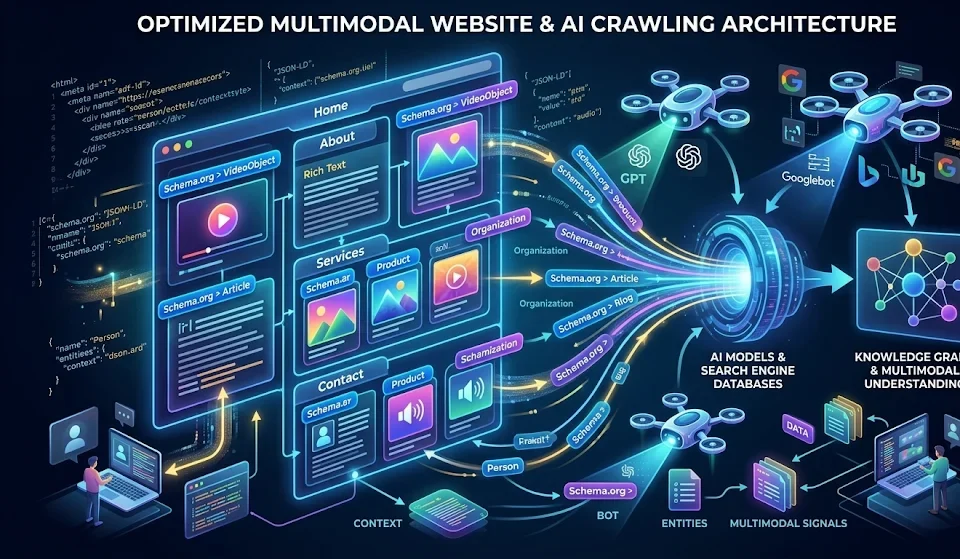
Add schema so machines understand your pages

Schema markup is the lightweight code layer that tells machines what a page is—product, FAQ, how‑to, review, article—and how its pieces fit together. StudioHawk emphasizes using FAQ, how‑to, product, review, and article schema consistently across key pages so Google and AI systems can parse intent and structure without guesswork.​

Practical moves:

  • Generate schema for FAQs, product details, and articles using specialized GPTs or SEO tools, then validate it for errors.​
  • Add multiple relevant schema blocks to high‑value pages (e.g., product + FAQ + review) to fully describe what is on them.​

Use multimodal content (text, video, visuals)

Short videos, diagrams, charts, and screenshots not only help humans but also give AI models rich signals when they process pages. Goldie SEO routinely embeds YouTube videos into articles and then repurposes those transcripts and clips across Reddit and other platforms for extra visibility.

To apply this:

  • Turn your best explainer videos into blog posts, then embed the video at the top and interlink to funnels and lead magnets.​
  • Add simple visuals—process diagrams, flowcharts, annotated screenshots—that break up walls of text and signal depth and clarity.​


A site that loads quickly, uses clear headings, schema, and multimodal elements is far easier for both humans and AI crawlers to parse and rank.​

Hack 5 – Win The New AI‑Driven Consideration Phase

Hack 5 – Win The New AI‑Driven Consideration Phase

How buying journeys actually work now

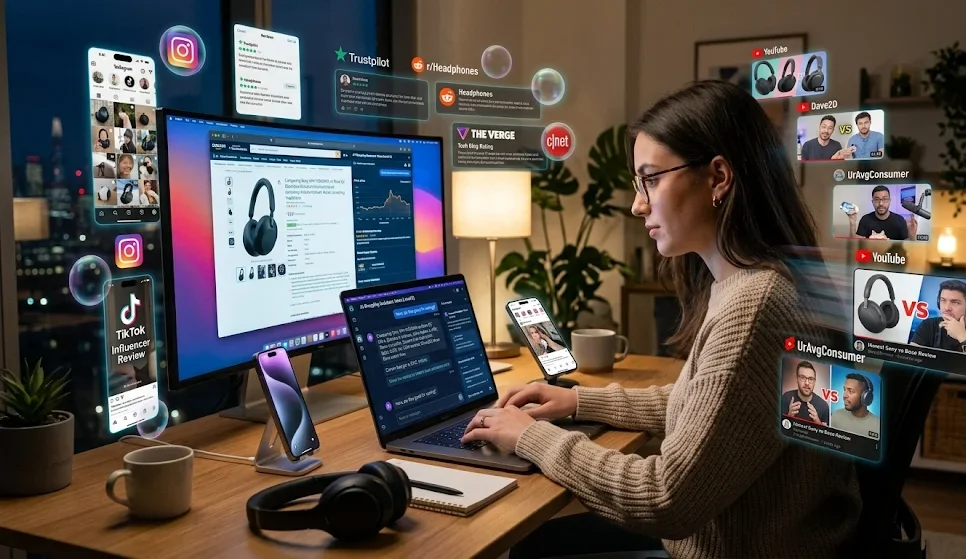
Many buyers today research entirely inside ChatGPT, Google AI Mode, YouTube, TikTok, and Reddit before they ever type your URL. In one case observed in a café, a buyer compared running‑shoe options in ChatGPT for ten minutes, then typed the chosen brand URL directly and checked out—Google’s traditional search results were never used.

That means the “mid‑funnel” has shifted from static blog posts to AI‑mediated conversations that aggregate reviews, videos, social content, and pricing in one place.

Off‑site signals that shape AI’s view of your brand

AI models learn who to recommend by cross‑checking many sources attached to your brand name:

  • YouTube videos, shorts, and podcasts that demonstrate expertise and case studies.
  • Reddit threads, TikTok reviews, Instagram posts, and product FAQs that capture real user sentiment.
  • Review platforms and vertical directories (Clutch, G2, Yelp, App stores) that show ratings and qualitative feedback.

To win this stage:

  • Systematically seed thought‑leadership content on YouTube, LinkedIn, and podcasts around your category keywords and “brand vs. competitor” comparisons.
  • Encourage and respond to reviews on major platforms so AI sees a pattern of quality and reliability, not a blank slate or complaints.​
  • Publish honest comparison pages (e.g., “YourBrand vs. Competitor”) that match the exact comparisons people make in public conversations.​


Your goal is that when someone types “Who is best for X?” into an AI tool, your name is the most context‑rich, trustworthy option it has.

Hack 6 – Use AI SEO Workflows And New KPIs (Citations, Not Just Clicks)

Hack 6 – Use AI SEO Workflows And New KPIs (Citations, Not Just Clicks)

Old metrics make you think you’re losing

As AI overviews and zero‑click results expand, traditional click‑based dashboards can show flat or even declining traffic while revenue from organic and AI‑assisted discovery quietly increases. In one enterprise case, headline traffic looked flat but new business from non‑brand organic sources was up 32% year‑on‑year after AI SEO improvements.​

If you only watch sessions and CTR, you will under‑value AI‑driven discovery and potentially cut the very efforts that are driving pipeline.​

New workflow and KPI stack for AI SEO

  • Use AI agents for execution, not thinking: Let LLMs research keywords, draft content, and analyze on‑page optimization, while humans decide positioning, offers, and POV.
  • Track AI citations and assisted revenue: Periodically paste your URLs into ChatGPT, Gemini, or Perplexity and ask them to summarize for a specific buyer; if your key points are missing, your content is unclear. Then align CRM and analytics so you can measure leads and sales that originate from or are clearly influenced by organic/AI search.​
  • Keep blogs and guides alive: Long‑form guides, explainers, and FAQs still dominate AI citation sets even if they no longer drive the same level of direct clicks.


Your true north becomes “revenue influenced by AI search and organic visibility”, not just “organic sessions”.

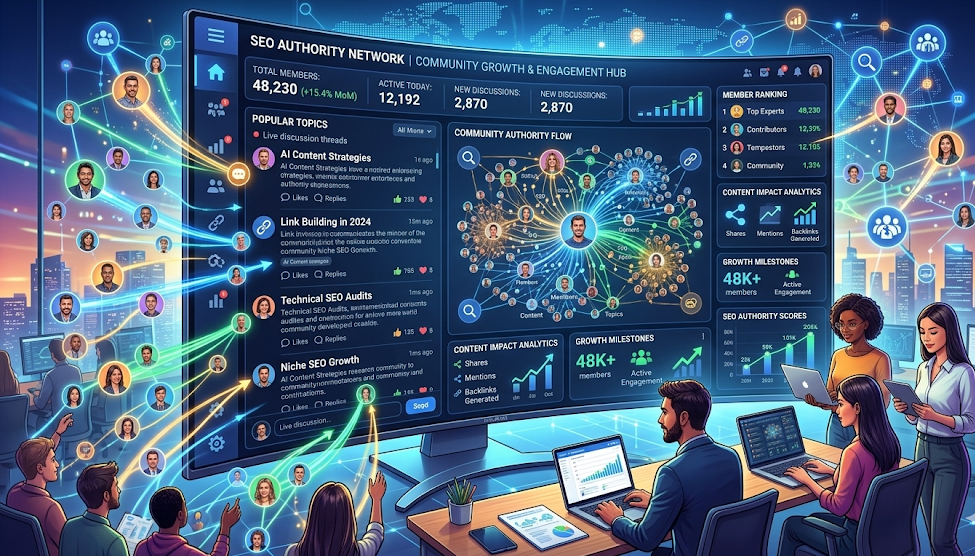
Hack 7 – Authority Capture SEO With Community Platforms (Skool Strategy)

Hack 7 – Authority Capture SEO With Community Platforms (Skool Strategy)

Rank without a traditional site using trusted environments

One of the most powerful TOP AI MARKETING HACKS IN 2026 is “authority capture”: putting your offer inside platforms that Google already deeply trusts instead of trying to build authority from scratch.​ The ambITious | AI channel demonstrates how communities hosted on Skool rank on the first page of Google for competitive keywords like “agency owners”, “YouTube business accelerator”, and “pickleball school” with minimal SEO work.​

Because Skool has hundreds of thousands of communities and tens of millions of members, Google crawls and ranks its public community “about” pages aggressively, treating them like authoritative entities rather than random posts.​

How to execute authority capture SEO on Skool (or similar)

  • Create a community where the community name is your target keyword (e.g., “AI Marketing Bootcamp”, “Local SEO For Dentists”, “Virtual Assistant Agency Mastermind”).​
  • Optimize the public “about” page with a clear, keyword‑rich description, benefits, and links back to your main site, SaaS, or funnel.​
  • Add proof—testimonials, screenshots, and case‑study snippets—so visitors and AI see that real people join and get results.​


This hack lets you rank faster for competitive educational and program keywords, then direct that traffic into high‑ticket offers, community memberships, or SaaS trials.

Hack 8 – AI Voice Agents So You Never Miss Leads Again

Hack 8 – AI Voice Agents So You Never Miss Leads Again

The invisible leak: missed calls

Adam Erhart highlights a brutal but common reality: many local and service businesses miss over half of their inbound calls, translating to tens or hundreds of thousands in lost annual revenue. For example, a spa missing 12 calls a day at roughly 150 per visit easily loses more than 65,000 per year, before counting repeat visits.​

In HVAC, dental, or home‑services niches, this “missed call leak” can compound into six‑figure annual losses once you factor in lifetime value.​

Voice AI as a 24/7 receptionist

Voice AI agents now act like always‑on receptionists that:

  • Answer calls instantly when staff are busy or after hours.
  • Qualify callers, ask key questions, book appointments, and trigger SMS/email follow‑ups automatically.​
  • Log call transcripts and data straight into a CRM while staying on‑brand with a customized voice and greeting.​

A simple setup flow inside platforms like HighLevel lets you:

  • Create a named AI agent (e.g., “Sarah from Fog & Fire Studio”) with a natural voice.​
  • Define goals (collect details, book consults, route calls) and business hours.
  • Attach the agent to a phone number or set up call forwarding so missed calls roll over to AI after a few rings.​


Agencies and consultants can then resell this as a productized service at 300–500 per month per client, layering additional automations like review requests, missed‑call text‑back, and reminder sequences on top.​

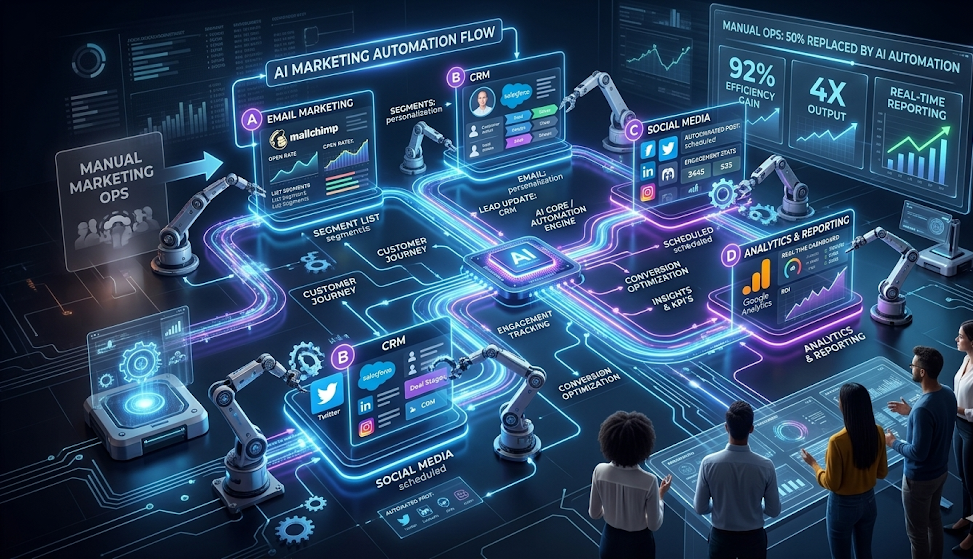
Hack 9 – Replace Half Your Manual Marketing Ops With AI Automation

Hack 9 – Replace Half Your Manual Marketing Ops With AI Automation

10 AI tactics from a 10M agency

Lead Gen Jay outlines over ten concrete ways his agency uses AI and automation to replace low‑value human tasks and free up budget for strategy and creative work. The common thread is the combination of LLMs (ChatGPT), automation platforms (Zapier, Make, Pabbly), and specialized tools for SEO, design, and ads.​

Key automations include:

  • Inbound sales automation: AI reads and replies to incoming emails and messages using trained prompts, steering leads toward calls or purchases without human BDRs.​
  • Social media syndication: A new blog post or YouTube video triggers a workflow that writes and posts platform‑specific updates to X, Facebook, LinkedIn, Medium, and more.​
  • AI knowledge‑base chatbots: A chatbot trained on your site, docs, and FAQs answers support and pre‑sales questions better, faster, and more consistently than low‑cost reps.​
  • AI graphic support: Tools like Canva’s text‑to‑image dramatically reduce the time designers spend on concepts and variations, giving one designer the output of many.
  • AI SEO: LLM‑driven workflows help find long‑tail keywords, write undetectable yet high‑quality posts, and then refine them using specialized SEO platforms such as Alliai.​
  • Content repurposing: Tools like Opus Clip cut long videos into short, captioned vertical clips ranked by virality score, eliminating manual timestamping and subtitle work.
  • AI‑augmented paid ads: AI analyzes creatives, copy, and performance to suggest better combinations and new tests, with tools like exo.ai helping identify winning assets and audiences.​
  • Strategic planning: LLMs draft marketing strategies, business plans, and campaign roadmaps based on your inputs, giving you a strong base to refine instead of starting from a blank page.​


For service providers, wiring these automations into client accounts can simultaneously increase margins and perceived value.

Hack 10 – AI Social Media Stack: Captions, Visuals, Repurposing, Scheduling

Hack 10 – AI Social Media Stack: Captions, Visuals, Repurposing, Scheduling

A focused beginner‑friendly tool stack

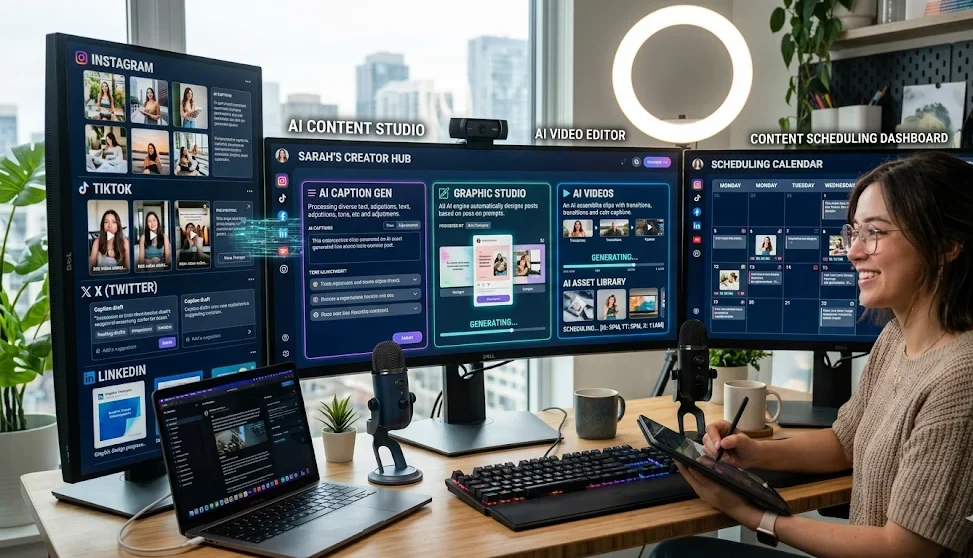
Pin Generator’s 2026 guide to AI tools for social media marketing shows how to build a simple yet powerful stack across five layers: captions, visuals, multi‑platform automation, video repurposing, and scheduling/analytics.​

Recommended tools include:

  • Captions & copy: ChatGPT and Claude for ideation, hooks, caption drafts, and long‑form posts; Perplexity for fact‑checking stats and trends before you publish.​
  • Visuals & design: Canva AI for background removal, image expansion, cleanups, and layouts; Nano Banana (Gemini‑based) for realistic product and lifestyle mockups.​
  • Multi‑platform automation: Content Generator to transform blog URLs or Etsy listings into ready‑to‑post content for Facebook, Instagram, Pinterest, LinkedIn, and X using reusable templates.​
  • Short‑form repurposing: Opus Clip to automatically extract the most engaging clips from long videos or podcasts into vertical shorts.​
  • Scheduling & analytics: Metricool and Buffer for publishing calendars, performance dashboards, and cross‑platform analytics.​


Instead of trying every new tool, pick one per layer, master it, and then add more sophistication only if there is a clear ROI gap.

Strategy: market what already works, not random AI content

Max from Pin Generator stresses using AI to amplify real existing content—blogs, YouTube videos, products—not to churn out low‑quality “AI slop”. That means:​

  • Starting from proven offers, articles, and videos that already convert.
  • Using AI to generate dozens of variations in hooks, angles, and visuals while staying on‑brand.​
  • Letting analytics tools tell you which assets actually move traffic, leads, and sales, then doubling down on those patterns.This avoids the trap of busywork content and builds compounding distribution around your best ideas.


Hack 11 – AI Social Listening And Anomaly Detection For Smarter Decisions

Hack 11 – AI Social Listening And Anomaly Detection For Smarter Decisions

From “more content” to “better listening”

Most “AI tools for marketing” lists focus on producing more content, but Brand24’s 2026 stack argues that the real leverage is listening at scale and converting noise into clear decisions. AI‑powered social listening tools can ingest millions of mentions and return sentiment trends, topic clusters, anomaly alerts, and influencer maps in minutes.​

Brand24’s AI features include:

  • Sentiment detection: Automatic classification of mentions as positive, negative, or neutral so you can see if conversations are trending up or down without manual reading.​
  • Topic and conversation analysis: AI groups mentions into themes and subtopics so you can see what people are actually talking about and how it changes over time.​
  • Anomaly detection: Alerts when there is an unusual spike in mentions or reach, plus identification of the posts or threads that triggered it.​
  • Author and source intelligence: Identification of which creators, publications, and channels are driving narratives around your brand and competitors.​

Turning insights into action

A simple workflow for 2026:

  1. Create projects for your brand and 1–3 top competitors.
  2. Review sentiment and topics weekly to see emerging pains, objections, and language.
  3. Investigate spikes using anomaly alerts to catch crises, PR wins, or viral conversations while they still matter.​
  4. Update messaging, positioning, and content priorities to mirror how the market actually talks about problems and solutions.​


In a case study with Appwrite, Brand24’s AI insights helped the growth team explain sudden performance jumps and identify trending topics in competitor conversations, leading to better content and channel bets.​

Hack 12 – Hyper‑Personalization & Predictive Targeting (Apple Intelligence, Yelp AI, Etc.)

Hack 12 – Hyper‑Personalization & Predictive Targeting (Apple Intelligence, Yelp AI, Etc.)

AI sees patterns humans don’t

3D Media’s “marketing from the future” breakdown illustrates how AI and machine learning already detect life events and preferences based on subtle purchasing and behavioral patterns—sometimes before the customer consciously realizes it. Classic examples include retailers predicting pregnancy based on unusual purchase combinations and repurposed products (like Play‑Doh) finding entirely new target audiences through behavioral data.

With the rise of on‑device AI such as Apple Intelligence, phones will increasingly monitor searches, messages, photos, and purchases to infer preferences and intent, feeding that data back into advertising ecosystems.

Practical implications for marketers

  • Ultra‑precise targeting: Rather than broad demographics, platforms will offer audiences based on nuanced behaviors and predicted intent (e.g., “wine enthusiasts about to host an event,” “homeowners considering HVAC upgrades”).​
  • AI‑assisted shopping journeys: Marketplaces like Amazon and platforms like Yelp already let users describe problems in natural language (e.g., “my thermostat isn’t turning on”) and then match them to the best‑rated local providers or products, sometimes via AI chat.​​
  • Reputation as a gating factor: AI will be reluctant to recommend businesses or products with weak ratings, poor reviews, or high return rates because that erodes user trust in the platform itself.​

To leverage this:

  • Invest heavily in product/service quality and post‑purchase experience so review profiles remain strong even as volume scales.
  • Ensure your business listings and product feeds clearly label the problems you solve, so AI matching systems can pair you with the right described issues (“thermostat repair”, “emergency leak detection”, “non‑toxic toddler toys”).​
  • Think beyond single purchases and design experiences that earn repeat business and advocacy, since AI will increasingly weight lifetime satisfaction, not just first conversion.​
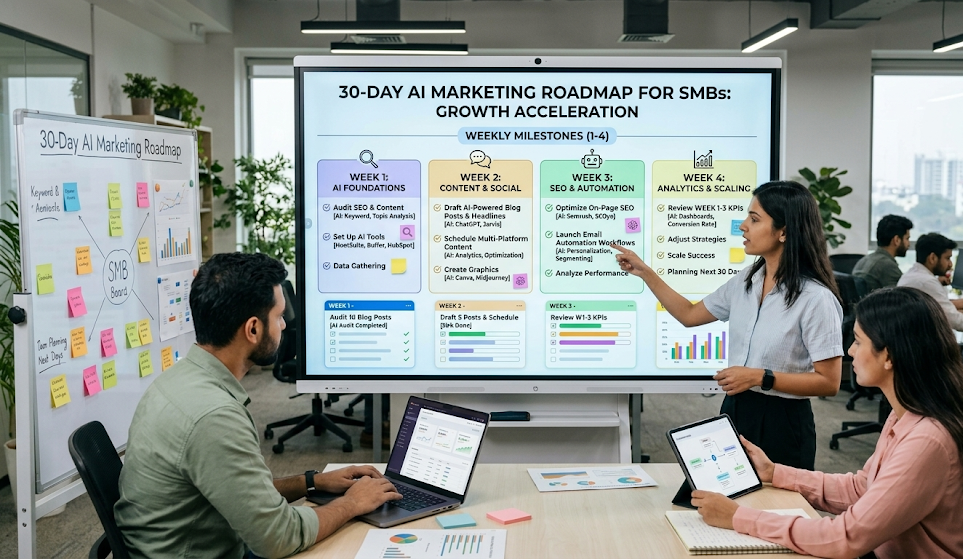
30‑Day Implementation Roadmap For SMBs

30‑Day Implementation Roadmap For SMBs

This roadmap assumes you are a small or mid‑size business owner or marketing lead who wants to roll out the TOP AI MARKETING HACKS IN 2026 without getting overwhelmed.

Week 1 – Foundations & Audit

  • Map your 3–5 core entities (main services/products) and draft a simple topical hub plan for each.
  • Audit your site for author bios, case studies, and proof; list what needs to be added or updated.​
  • Set up Brand24 or a similar AI listening tool for your brand and two main competitors.​
  • Choose your core AI tools: one LLM (ChatGPT or Claude), one automation platform (Zapier/Make), one design tool (Canva), and optionally one social tool (Metricool/Buffer).

Week 2 – AI SEO & Content Engine

  • Use an AI model to generate long‑tail question keywords for your first entity and prioritize 4–6 low‑competition topics.​
  • Draft at least two 1,500–2,000 word pillar articles with clear question headings, direct answers, and internal links to existing content.
  • Add schema (FAQ, article) to these new pages and ensure mobile speed and UX are acceptable.​
  • Turn at least one existing or new video into a blog post with the embedded video and clear CTAs.

Week 3 – Automation & Lead Capture

  • Implement at least one voice AI receptionist or missed‑call automation for your own business or a pilot client.​
  • Set up 1–3 marketing automations (e.g., blog → multi‑platform posts, new lead → AI email sequence, webinar replay → Opus Clip repurposing).
  • Launch or optimize a Skool (or similar) community with a keyword‑rich name targeting a strategic term, and link it to your offers.​
  • Configure dashboards to track leads and sales influenced by organic search and AI‑assisted content, not just sessions.​

Week 4 – Social Stack, Listening, And Iteration

  • Plug your blogs, YouTube videos, and product pages into a repurposing tool like Content Generator or Pin Generator and schedule 2–3 weeks of posts across platforms.​​
  • Review AI listening insights: identify 2–3 recurring pains and 3–5 common phrases people use about your category.​
  • Rewrite key landing page headlines and hero sections using the exact language customers use in mentions and reviews.​
  • Test your main pages in ChatGPT/Gemini: ask each tool to “summarize this page for a [your ideal buyer]” and refine content until it outputs your key arguments and benefits in 3–4 lines.​

By the end of 30 days, you will have:

  • Entity‑based content hubs taking shape.
  • AI‑assisted writing and optimization processes active.
  • At least one AI receptionist or key automation live.
  • A trusted‑platform community asset ranking for a target keyword.
  • Social and listening systems feeding your strategy.
Advanced Use Cases For Agencies And Creators

Advanced Use Cases For Agencies And Creators

For agencies, consultants, and content creators, the TOP AI MARKETING HACKS IN 2026 open up new productized services and scalable offers.

Productized AI services

  • AI SEO sprints: 30‑day projects to build entity hubs, AI‑assisted content, and schema around a narrow niche, with deliverables including keyword maps, content outlines, and first drafts.
  • AI voice agent setup: Done‑for‑you voice AI receptionist packages with monthly monitoring, script optimization, and performance reporting.​
  • AI social stacks: Installation and training packages around the Pin Generator stack—caption AI, Canva AI, Opus Clip, Metricool/Buffer, plus custom prompts and SOPs.​
  • Authority capture builds: Skool community setup and authority capture SEO for coaches, course creators, and SaaS founders targeting specific “program” or “masterclass” terms.​

Community‑first, AI‑amplified brands

Debbi Starr’s “messenger, not marketer” framework shows that as marketing distrust grows, communities and authentic storytelling become core moats, with AI supporting but not replacing human presence. Creators who show up consistently as guides and facilitators, then use AI to handle logistics and amplification, tend to build deeper loyalty and higher‑value ecosystems.

Combine this with:

  • Long‑form, high‑value content captured on video and turned into multi‑channel clips.
  • Private communities where AI helps with moderation, onboarding, and FAQs but humans lead transformation and accountability.
  • Offers that bundle strategy, community access, and AI‑powered implementation support (templates, automations, dashboards).


This approach positions you as the architect of an AI‑enabled transformation rather than just another “tool recommender”.

Final Thoughts: Turn These Hacks Into A Compounding AI Growth Engine
Final Thoughts: Turn These Hacks Into A Compounding AI Growth Engine

AI will not replace good marketing fundamentals in 2026; it will amplify them—positively for those with strong offers and systems, and negatively for those with weak products and random tactics. The TOP AI MARKETING HACKS IN 2026 revolve around two big ideas: make your brand easy for AI to understand and recommend, and use AI to remove friction from every part of your marketing and sales process.

FAQs

Entity-based SEO, AI voice agents for lead capture, and Skool authority capture – these three low-cost, high-impact hacks deliver results for SMBs in 30 days without needing big teams.

Move beyond keywords to entities (brands, products, locations) with topical hubs – AI search engines like ChatGPT and Google AI Overview pick you as the authority for complete topic coverage.

Yes! Over 50% of inbound calls get missed – AI receptionists answer 24/7, qualify leads, and book appointments. One spa example: 12 missed calls/day = $65K+ annual revenue saved.

ChatGPT/Claude (captions), Canva AI (visuals), Opus Clip (video repurposing), Metricool/Buffer (scheduling) – this simple 5-tool stack automates 80% of social media work.


Also Read:

Book a Free Consultation

Ready to elevate your customer experience? Don’t settle for ordinary support. Our dedicated consultants are standing by to match your enterprise with the highest-caliber customer service executives in the USA. From virtual assistants to specialized account managers, we have the expertise and talent pool to meet your needs. 

Contact our team today to discuss how our tailored customer executive services can transform your support operations. Let us help you hire or outsource the best customer service executives in USA, so you can focus on growing your business with confidence. Together, we will build a world-class customer support team that drives loyalty and success. 

Book a Free Consultation

Fill in the form below to book a free consulting session: