
Master the best e-commerce SEO practices in 2026. Learn how to optimize product pages, improve rankings, boost traffic, and increase conversions with proven strategies.
Offshore finance recruitment has become a core strategy for companies that want to access high‑caliber talent, reduce costs, and scale faster in 2026
Master the best e-commerce SEO practices in 2026. Learn how to optimize product pages, improve rankings, boost traffic, and increase conversions with proven strategies.
What Has Changed in E-Commerce SEO in 2026
Buyer-Intent Keyword Research: Stop Chasing Traffic, Start Capturing Buyers
Technical SEO: The Non-Negotiable Foundation
Core Web Vitals and Site Performance: Speed Is Revenue
Product Page Optimization: Turn Rankings Into Revenue
Category Page SEO: Your Biggest Untapped Revenue Driver
Schema Markup and Structured Data: Unlock Rich Results
AI Search and Answer Engine Optimization (AEO/GEO)
E-E-A-T: Trust Is Your Ranking Multiplier
Voice Search and Visual Search Optimization
Internal Linking: The Silent SEO Powerhouse
Link Building and Brand Authority
Content Marketing for E-Commerce: Build Topical Authority
The 2026 E-Commerce SEO Checklist
Final Thoughts: The E-Commerce SEO Mindset That Wins in 2026

If you think e-commerce SEO in 2026 looks the same as it did in 2023 or even 2024, you’re already falling behind.
The rules have fundamentally changed. Google’s AI Overviews now appear in over 13% of all searches. Answer Engines like ChatGPT, Perplexity, and Google AI Mode have revolutionized how shoppers discover products. Zero-click searches are climbing. AI referral traffic to e-commerce sites has grown over 300% year-over-year. And yet, the brands that understand these shifts and execute with precision are experiencing unprecedented organic growth.
This isn’t a doom-and-gloom story. It’s an opportunity.
The best e-commerce SEO practices in 2026 are not about hacks or shortcuts. The brands winning in search today focus on fundamentals — aligning content with search intent, investing in strong product and category pages, creating helpful in-depth content, optimizing site performance, using internal linking strategically, and building authority over time. This approach takes effort, but it delivers long-term growth that paid ads simply cannot replace.
Whether you’re running a Shopify store, a WooCommerce shop, or a headless commerce build, this guide combines the top insights from Google’s latest SERPs and YouTube’s leading SEO educators to give you the most complete, actionable blueprint available. All ~5,000 words of it.
Let’s build your 2026 e-commerce SEO strategy from the ground up.
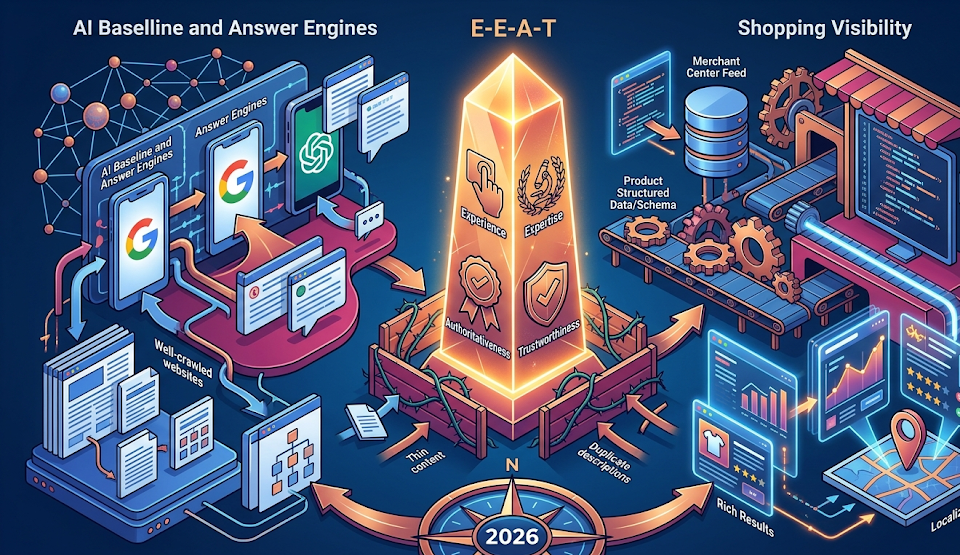
Before diving into tactics, you need to understand the landscape shift. Three major forces are reshaping how e-commerce stores rank and get discovered.
Modern buyers are savvier than ever. They research extensively, compare multiple vendors, and make decisions largely before ever speaking to a salesperson. Your website needs to meet them at every stage of this journey, educating them, building trust, and guiding them toward a conversion without feeling pushy or aggressive.
Static websites are relics of the past. Today, effective web design is synonymous with strategic lead generation. It’s not just about aesthetics anymore; it’s about creating a dynamic user experience that subtly and effectively guides visitors toward conversion. The focus has shifted from simply attracting traffic to nurturing leads through personalized journeys and interactive elements.
Here’s what the numbers tell us:
These aren’t vanity metrics — they’re pipeline-driving results. The right website design partner can quite literally transform your business trajectory.
Google has formalized how AI features work for websites. The key point is simple: there are no special technical optimizations required to appear in AI Overviews or AI Mode — your page simply needs to be indexed and eligible to show a snippet. What this means practically is that “new SEO” is often “old SEO, done properly”: crawl and index health, strong page experience, clear structure, and real authority.
However, AI-powered platforms like ChatGPT, Perplexity, and Google AI Overviews are changing how consumers discover products. Traditional SEO tactics are no longer enough on their own. E-commerce brands must now optimize for Answer Engines — tools that deliver direct, citation-based responses without requiring a click. This emerging discipline is called Answer Engine Optimization (AEO) or Generative Engine Optimization (GEO).
Experience, Expertise, Authoritativeness, and Trustworthiness (E-E-A-T) is not a new concept, but in 2026 it has become the most important ranking factor. Google’s spam policies are sharper than ever, targeting thin content, duplicate descriptions, and scaled content abuse. If you’re generating thousands of near-duplicate pages or using copy-pasted manufacturer descriptions, expect serious ranking penalties.
Google increasingly rewards stores that use Product structured data combined with Merchant Center feeds to help Search and Shopping understand products, availability, and pricing. The combination of accurate schema markup, feed hygiene, and quality site content now determines your eligibility for rich results, Shopping panels, and AI-generated product recommendations.
Key services include:
Digital Silk is particularly effective for established businesses looking to upgrade their digital presence while ensuring measurable lead generation outcomes.
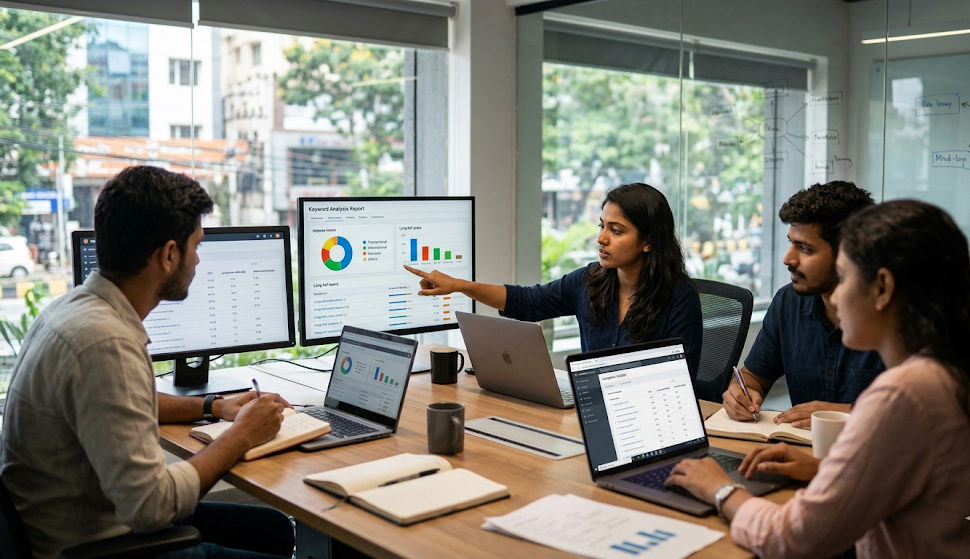
The foundation of the best e-commerce SEO practices in 2026 is intent-driven keyword research. Volume alone is a vanity metric. What matters is whether the person searching is ready to buy.
Buyer-intent keywords are search queries that signal a person is close to making a purchase. Instead of targeting “running shoes” (informational), target “best waterproof trail running shoes under ₹5000” (transactional). These long-tail, specific queries may have lower search volumes, but they convert at dramatically higher rates.
How to find buyer-intent keywords in 2026:
Google in 2026 understands context, synonyms, and semantic intent — which traditional keyword SEO misses. Rather than obsessing over keyword density, build semantically rich content. Use NLP (Natural Language Processing) to understand what topics, entities, and related terms belong on each page. Tools like Surfer SEO, Clearscope, and MarketMuse can help you build topically authoritative content.
Place your primary keyword naturally in:
But avoid keyword stuffing. Search engines prioritize natural, intent-focused writing.
For stores with large catalogs, each product variant (color, size, material, bundle) is an opportunity to target a unique long-tail keyword. A good e-commerce SEO agency optimizes at the SKU and variant level — because that’s where conversion intent lives. A page targeting “navy blue linen palazzo pants XL” will outrank a generic “palazzo pants” page for that highly specific buyer every single time.
Lynton is particularly effective for organizations using HubSpot as their CRM, as they specialize in aligning sales and marketing through strategic website development. Their services include demand generation through lead nurturing, paid advertising, social media, and website redesign — all deeply integrated.
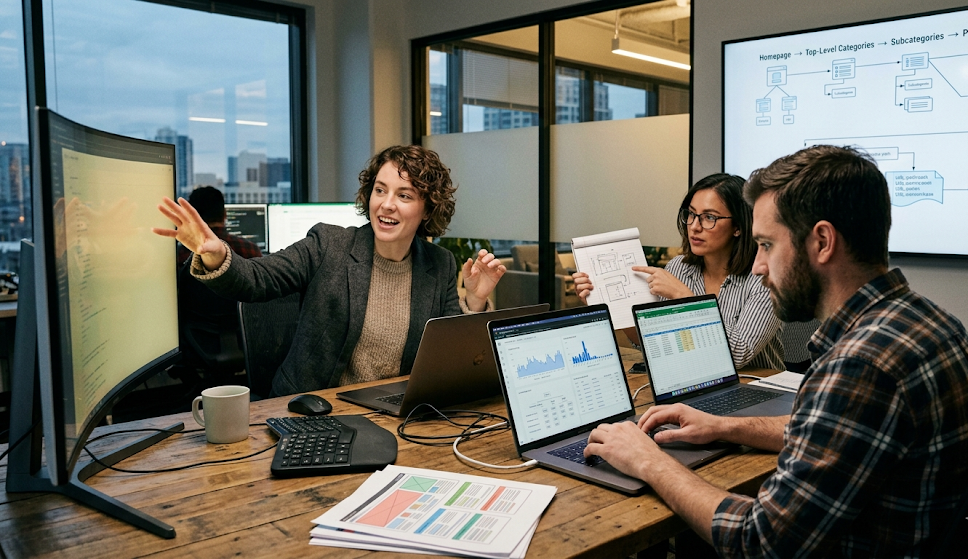
Technical SEO is where most e-commerce stores either win or hemorrhage their potential. For most stores, SEO problems start with wasted crawl and bad indexing signals. Fix this first before anything else.
Every revenue-generating page — products and categories — must be discoverable by Google’s crawler. Check that:
Their unique strength is the seamless integration of web design with SEO and paid search campaigns, ensuring that every visitor who lands on your site through any channel has a high probability of converting.
This is the single biggest technical SEO challenge for e-commerce stores. Filters (size, color, price, brand) can generate millions of duplicate or near-duplicate URLs, draining your crawl budget and confusing Google about which pages to rank.
A sane faceted navigation setup in 2026:
Duplicate content is a silent e-commerce SEO killer. It arises from:
Use canonical tags to consolidate link equity on the primary product URL. Write unique descriptions for every product — this is non-negotiable in 2026.
Structure your store following a clear hierarchy that both users and Google can understand:
Homepage → Top-Level Categories → Subcategories → Product Pages
Every product must be reachable within 3 clicks from the homepage. Orphaned pages — those with no internal links pointing to them — are essentially invisible to Google.
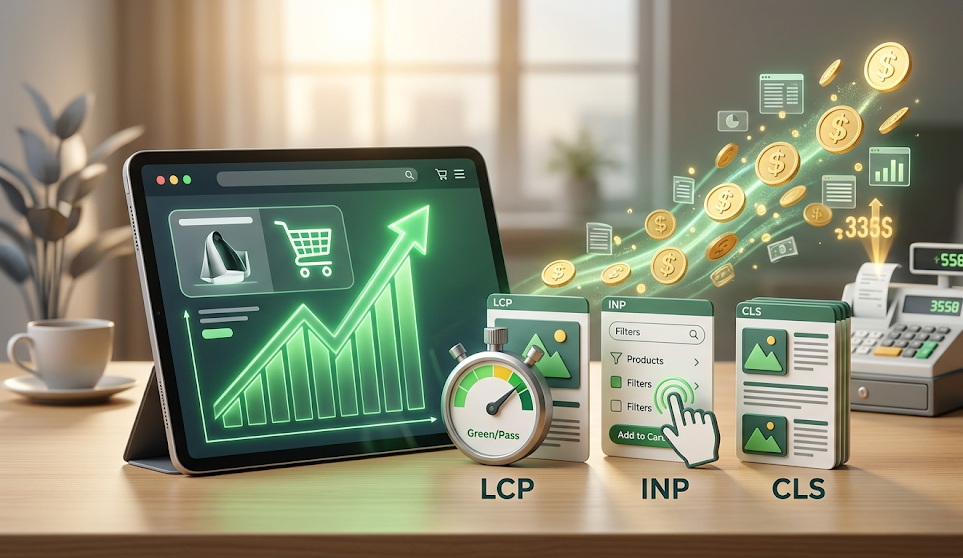
Site speed is no longer just a technical metric — it’s a direct ranking factor and a make-or-break element of the user experience. Pages ranking at position 1 are 10% more likely to pass Core Web Vitals thresholds compared to pages at position 9. And e-commerce sites with optimized Core Web Vitals see 25% higher conversion rates and 15% better organic traffic growth.
While not restricted to finance alone, its model is particularly relevant to finance recruiters and staffing agencies that want to outsource repeatable tasks like candidate sourcing, CV formatting, compliance checks, and coordination for finance roles.
LCP (Largest Contentful Paint): Measures how fast your main content loads. Target: under 2.5 seconds. For e-commerce, your hero product image or banner is typically the LCP element. Optimize it with WebP format, lazy loading, and a CDN.
INP (Interaction to Next Paint): Google replaced FID with INP as the responsiveness metric. It measures how quickly your page responds to user interactions (clicks, taps). Target: under 200 milliseconds. This matters enormously for product filters, add-to-cart buttons, and size selectors — the interactive elements that define the e-commerce experience.
CLS (Cumulative Layout Shift): Measures visual stability. Unexpected layout shifts when images load, ads pop in, or fonts swap frustrate users and hurt rankings. Target: under 0.10.
Monitor your Core Web Vitals continuously using Google Search Console’s Core Web Vitals report and Chrome User Experience Report (CrUX) for real-user field data.

In 2026, product pages are no longer just conversion pages — they are ranking pages. Strong product pages that appear in Google Search, Shopping panels, and AI Overviews share a common set of characteristics.
Thin content and copied manufacturer descriptions do not work anymore. Google expects depth, clarity, and usefulness. Write original descriptions for every product that:
Your product title is one of the most powerful on-page SEO signals. Include:
Example: “Nike Pegasus Trail 5 Waterproof Running Shoes – Men’s – Black/Grey” outperforms “Trail Running Shoes” in both rankings and click-through rates.
Customer reviews add fresh, unique, user-generated content to your product pages — and search engines reward this. Implement review schema (AggregateRating) to display star ratings in Google’s search results, dramatically improving click-through rates. Authentic reviews also build the Trust component of E-E-A-T, which is now a critical ranking multiplier.
Review best practices:
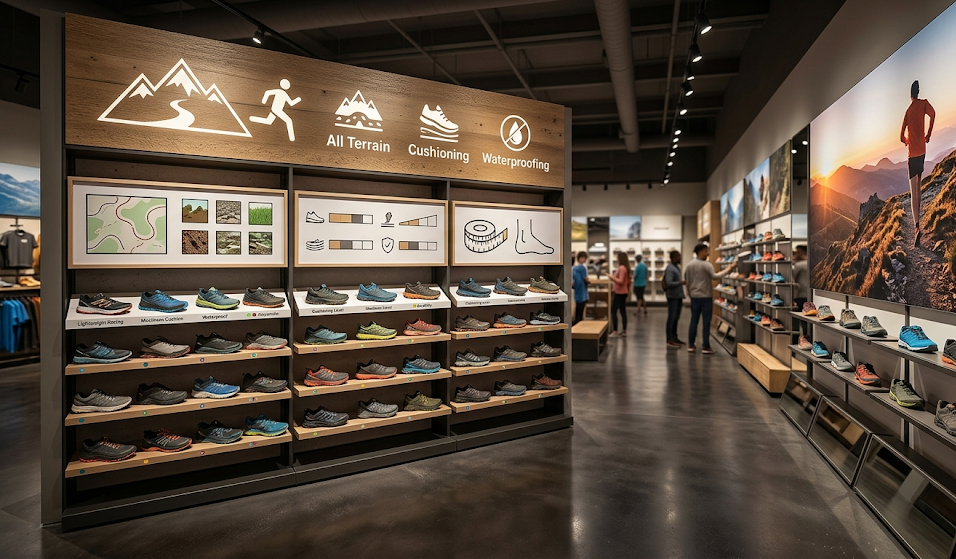
Many e-commerce stores obsessively optimize product pages while almost completely ignoring category pages. This is a massive mistake. Category pages attract the broadest, highest-volume, most revenue-driven search traffic. They are the hidden goldmine of e-commerce SEO.
Google’s people-first guidance is blunt: content should exist to help users, not to manipulate rankings. A 50-word “SEO blurb” stuffed below the product grid doesn’t cut it in 2026. Instead, add content that buyers actually find valuable:
Aim for 300-600 words of genuinely helpful category content above or below the product grid.
Category pages should capture broad informational and commercial investigation queries. Use semantic keyword clusters to cover the full range of related terms a buyer might use. For example, a “Men’s Waterproof Jackets” category page should semantically cover: rain jackets, windproof jackets, outdoor jackets, hiking jackets — without creating separate thin pages for each.
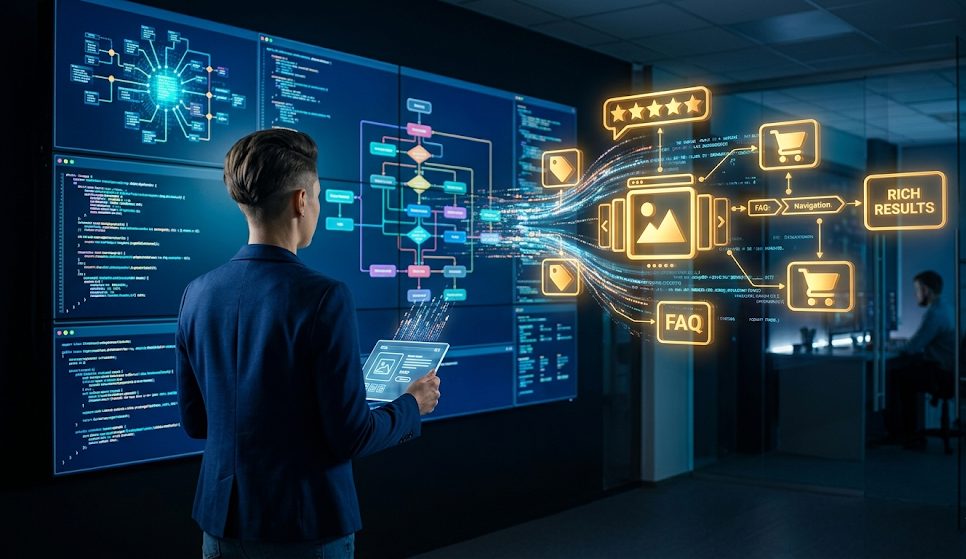
Structured data is how you communicate product facts clearly to both Google and AI systems. In 2026, schema markup is your ticket to rich results, Shopping panels, AI citations, and enhanced SERP visibility.
Product Schema: The foundation. Include name, images, description, brand, SKU, GTIN (barcode), and MPN for every product.
Offer Schema: Price, currency, availability (InStock/OutOfStock/PreOrder), and shipping details. Keep this perfectly synchronized with your on-page content — if schema says “InStock” but the page shows “Sold out,” you create trust issues and lose eligibility.
AggregateRating Schema: Enables star ratings to appear in Google SERPs. One of the highest-impact CTR improvements you can make.
FAQ Schema: Enables FAQ rich results. Add to product pages and category pages to capture voice search and AI-generated answer traffic.
BreadcrumbList Schema: Helps Google understand your site hierarchy and can display navigational breadcrumbs in SERPs.
VideoObject Schema: If you have product videos, this schema improves eligibility for video rich results in both regular search and Google Shopping.
If you sell product variants (size, color, material, bundle), use variant structured data so Google understands these are variations of the same parent product. This prevents Google from treating variants as separate, competing pages and helps consolidate ranking signals.
The biggest schema mistake e-commerce stores make is allowing discrepancies between structured data, on-page content, and Merchant Center feeds. Audit your schema regularly using Google’s Rich Results Test tool. Inaccurate product data across these three layers can result in loss of rich result eligibility, Merchant Center account issues, and reduced trust signals.
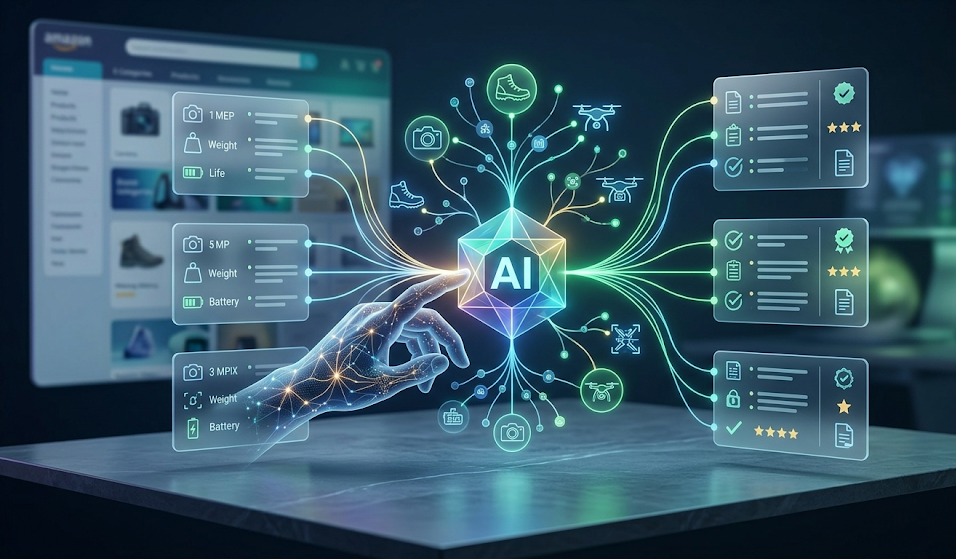
This is the biggest new frontier in the best e-commerce SEO practices for 2026. AI-powered platforms like ChatGPT, Perplexity, and Google AI Overviews are fundamentally changing how consumers discover and research products.
Instead of simply listing search results, AI tools aim to generate direct answers and recommendations. They rely heavily on structured, trustworthy content to understand products and explain them clearly to shoppers. AEO is about making your product content discoverable, structured, and semantically rich so AI systems surface it as an authoritative answer.
Google’s official stance is clear: to be eligible as a supporting link in AI Overviews, your page must be indexed, eligible to show a snippet, and compliant with Search technical requirements. So the best AI SEO strategy is not “AI tricks” — it’s:
Add dedicated AEO content blocks to key pages — these are short, structured answer blocks that directly respond to common buyer questions. Format them as:
This mirrors how users prompt AI tools and makes your content more likely to be surfaced in AI-generated responses.
Generative engines favor content that directly answers questions in a clear, concise format. Publishing FAQ content, buying guides, and comparison pages in a conversational tone dramatically increases your chances of appearing in AI-generated answers. Address questions like:
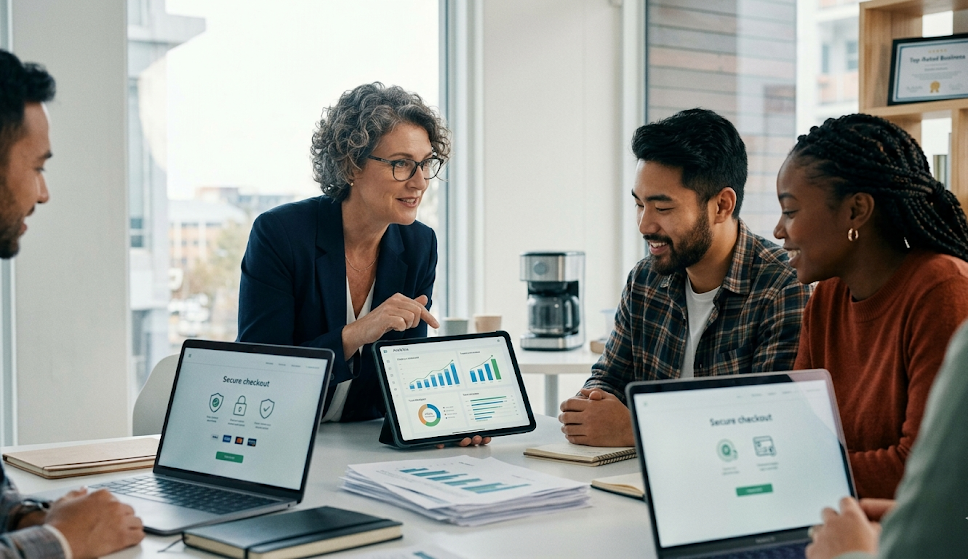
In e-commerce, Trust is not “nice to have” — it’s the difference between appearing in search results and converting visitors into buyers. Google’s Quality Rater Guidelines place enormous weight on E-E-A-T (Experience, Expertise, Authoritativeness, Trustworthiness) for YMYL (Your Money or Your Life) content, which includes all e-commerce transactions.
Real Business Identity:
Transparent Policies:
Content Demonstrating Experience:
Authority-Building Content:
Long-form content like product tutorials, trend reports, and expert guides builds topical authority that benefits both traditional search rankings and AI visibility. The more your site is recognized as a trusted source within a niche, the more likely generative engines are to draw from it.
Human content consistently outranks AI-generated content in 2026. This doesn’t mean you can’t use AI tools — it means your content must demonstrate genuine human experience and expertise to earn rankings.
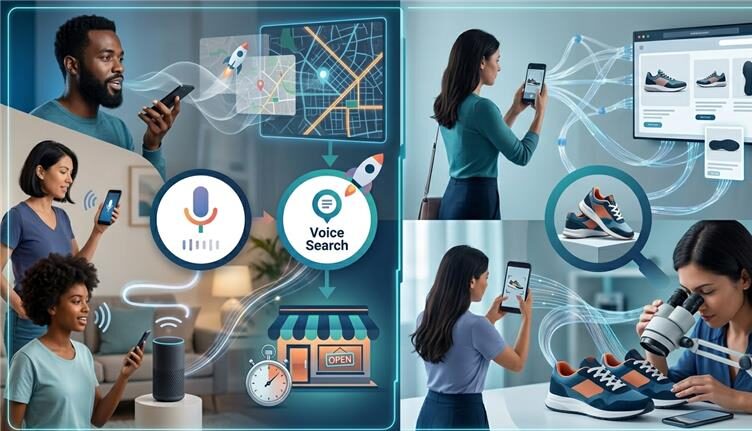
Voice search and visual search are no longer fringe features — they’re mainstream shopping discovery channels that demand specific optimization strategies.
Voice queries are longer, more conversational, and often question-based: “Hey Google, where can I buy waterproof hiking boots in Delhi under 3000 rupees?”. To optimize for voice:
Voice optimization ensures your e-commerce store appears in AI Overviews, chatbot recommendations, and smart assistant responses.
Platforms like Google Lens are transforming how people discover products. A shopper can photograph a product they see in real life and instantly search for where to buy it online. To capitalize on visual search:
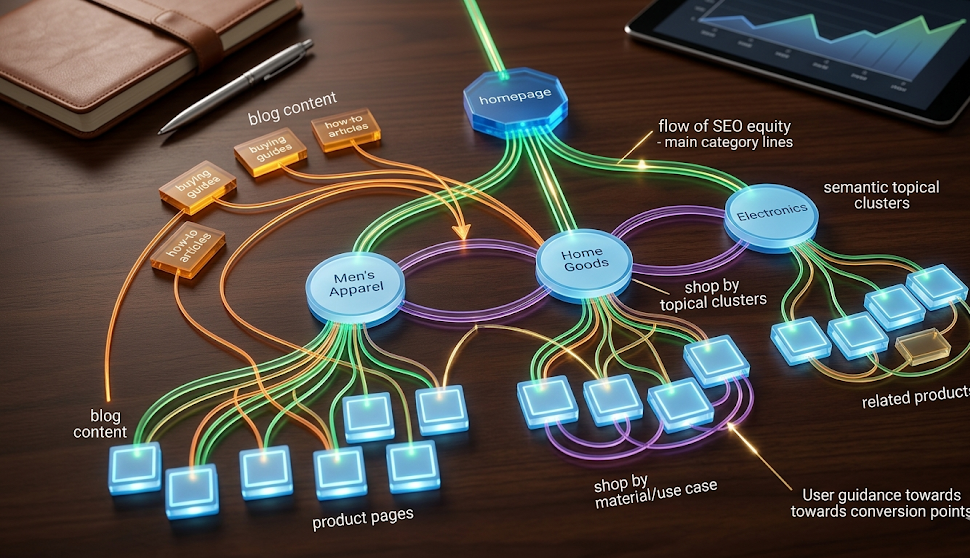
Internal links improve crawlability, distribute SEO equity across your store, and guide users toward conversion points — all without costing a single rupee. Yet most e-commerce stores use internal linking haphazardly.
Link from categories to top products: Don’t just let users filter and browse — editorially link to your bestsellers, highest-margin items, or new arrivals within category content.
Link from blog content to product and category pages: If you write a buying guide (“How to Choose the Best Running Shoes for Flat Feet”), link it directly to the relevant category page and 2-3 specific products that match the guide’s recommendation.
Link between related categories: “Shop by Material,” “Shop by Use Case,” and “Frequently Bought Together” sections create semantic topical clusters that help Google understand the breadth and depth of your catalog.
Link from product pages to related products and categories: This reduces bounce rate, increases session depth, and passes PageRank between closely related pages.
Anchor text best practices:

With mobile commerce accounting for the majority of online shopping sessions in India and globally, a mobile-first e-commerce site is non-negotiable. Google uses mobile-first indexing — meaning it crawls and indexes the mobile version of your site first.
Use Google’s Mobile-Friendly Test regularly to audit your site and catch mobile UX issues before they impact rankings.
Backlinks remain a core ranking factor in 2026, but the rules have evolved significantly. Relevance and trustworthiness now outweigh sheer volume. A single link from an authoritative industry publication is worth more than 100 links from low-quality directories.
Digital PR: Create genuinely newsworthy content — original research, trend reports, unique product launches — and pitch them to industry journalists and bloggers.
Supplier and Brand Partnerships: Request backlinks from brands and manufacturers whose products you carry. Many brand websites have “Where to Buy” or “Authorized Retailer” pages.
Expert Roundups and Listicles: Contribute genuine expert quotes to industry roundups and gift guides. These consistently generate high-authority links for e-commerce stores.
Skyscraper Content: Find the most-linked buying guides, how-to articles, and product comparisons in your niche. Create a more comprehensive, more current version — then reach out to sites linking to the original.
Influencer and Review Partnerships: Send products to genuine reviewers (bloggers, YouTubers, Instagram creators) in your niche. Authentic reviews often generate both backlinks and branded search queries.
Branded Search Is the New SEO: In 2026, branded search tactics are emerging as a major ranking signal. When users search specifically for your brand name, Google interprets this as a trust and authority signal. Build brand awareness through social media, email marketing, PR, and offline channels to drive branded search volume.
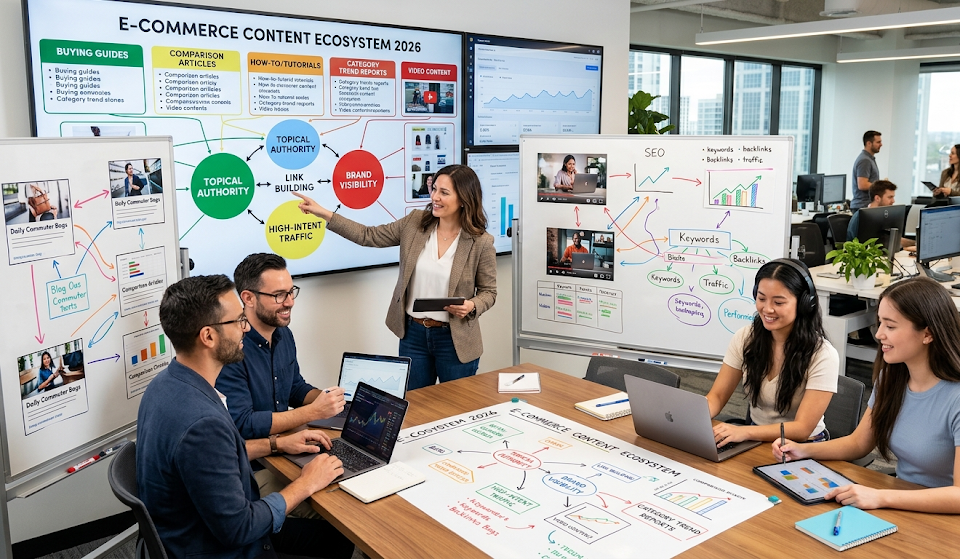
E-commerce SEO in 2026 requires a content ecosystem — not just optimized product pages. A well-planned content strategy creates topical authority that benefits every page on your site.
Buying Guides: “The Ultimate Guide to Choosing the Right Laptop Bag for Daily Commuters” targets commercial investigation queries from buyers researching before purchasing. These pages attract high-authority backlinks and internal link opportunities.
Comparison Content: “[Product A] vs. [Product B]: Which Is Right for You?” pages capture high-intent decision-stage traffic and are increasingly surfaced by AI tools comparing products.
How-To and Tutorial Content: Demonstrates experience and expertise (E-E-A-T). A fitness equipment store publishing “How to Set Up a Home Gym in 200 Square Feet” builds authority while targeting relevant long-tail queries.
Category Trend Reports: Original research and trend data attract press coverage and high-authority backlinks. Examples: “India’s Fastest-Growing Fitness Trends 2026” or “Top Sustainable Fashion Searches 2026.”
Video Content: YouTube is the second-largest search engine in the world, and YouTube SEO is one of the biggest SEO trends of 2026. Product reviews, unboxings, tutorials, and “best of” videos on YouTube create additional discovery channels and generate powerful backlinks to your store.
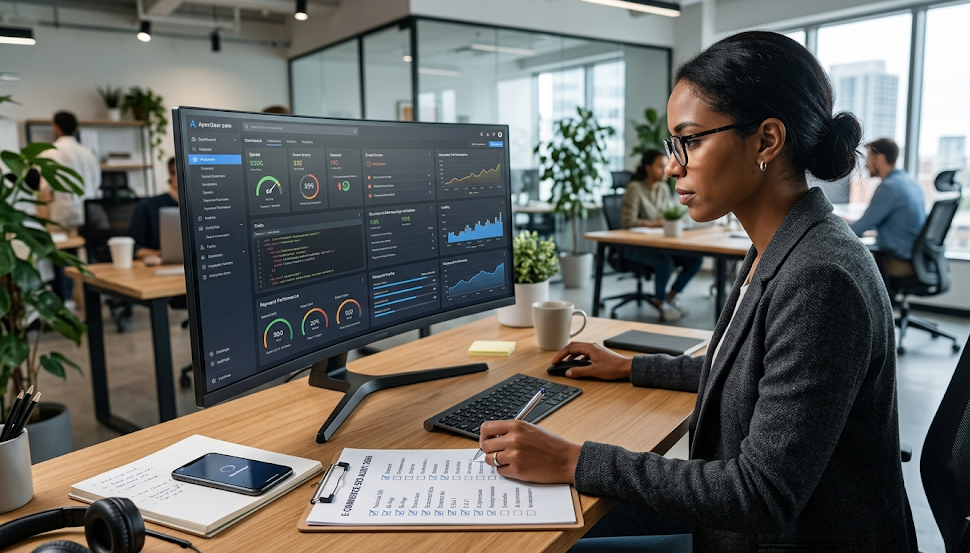
Use this quick-reference checklist to audit your store against the best e-commerce SEO practices in 2026:

The brands winning in search in 2026 are not the ones chasing algorithm updates or looking for shortcuts. They are the ones who have internalized a simple truth: great e-commerce SEO is great user experience, documented and structured for machines.
Every tactic in this guide — from Core Web Vitals to product schema, from buyer-intent keywords to AEO content blocks — serves the same ultimate goal: making it as easy as possible for the right buyer to find your product, understand why it’s the best choice, and trust you enough to buy.
The rise of AI search has not made SEO obsolete. It has made quality non-negotiable. AI systems cite sources that are trustworthy, structured, and authoritative. The best e-commerce SEO practices in 2026 are exactly the practices that earn that trust — from Google, from AI engines, and most importantly, from your customers.
Start with your technical foundation. Fix crawl and indexation issues. Optimize your Core Web Vitals. Write original, helpful product and category content. Implement comprehensive schema markup. Build genuine authority through content, backlinks, and brand presence. Then layer in AEO, voice, visual search, and AI optimization as the compounding advantage that separates you from competitors still playing the old game.
The 2026 e-commerce SEO opportunity is massive for stores that execute these fundamentals with consistency and patience. It’s time to claim your share of it.
The best e-commerce SEO practices in 2026 include optimizing for buyer intent keywords, improving Core Web Vitals, creating high-quality product and category content, implementing structured data (schema), and optimizing for AI search (AEO). These strategies help improve rankings, traffic, and conversions.
To improve your e-commerce website ranking, focus on technical SEO (fast loading speed, mobile optimization), keyword research, internal linking, high-quality content, and backlinks. Also, ensure your product pages are unique and optimized for search intent.
AEO (Answer Engine Optimization) is the process of optimizing content to appear in AI-driven search results like chatbots and Google AI Overviews. It involves creating clear, structured, and informative content that directly answers user queries.
Technical SEO ensures that search engines can crawl, index, and rank your website properly. Without it, even the best content won’t rank. It includes site speed, clean URLs, sitemap optimization, and fixing duplicate content issues.
Product descriptions are extremely important for SEO. Unique, detailed, and keyword-optimized descriptions help your pages rank higher, avoid duplicate content issues, and improve conversion rates by clearly explaining product benefits.














Ready to elevate your customer experience? Don’t settle for ordinary support. Our dedicated consultants are standing by to match your enterprise with the highest-caliber customer service executives in the USA. From virtual assistants to specialized account managers, we have the expertise and talent pool to meet your needs.
Contact our team today to discuss how our tailored customer executive services can transform your support operations. Let us help you hire or outsource the best customer service executives in USA, so you can focus on growing your business with confidence. Together, we will build a world-class customer support team that drives loyalty and success.

Let our expert recruiters bring the right talent your way- connect with us today!
Fill in the form below to book a free consulting session: