Offshore Candidate Screening Services in USA: The Complete 2026 Guide to Faster, Smarter, and More Cost-Effective Hiring
Offshore Candidate Screening Services in USA provide businesses with a reliable way to assess candidates before hiring. Through resume screening, skills testing, background verification, and AI-driven evaluation methods, these services help organizations identify qualified professionals faster. Companies benefit from improved hiring accuracy, reduced recruitment costs, shorter time-to-hire, and stronger workforce performance across industries.
What Are Offshore Candidate Screening Services?
Why US Companies Are Turning to Offshore Candidate Screening in 2026
The Business Case: ROI of Offshore Candidate Screening Services in USA
How Offshore Candidate Screening Services Work: Step-by-Step Process
Industries Where Offshore Candidate Screening Is Making the Biggest Impact
Key Features to Look For in an Offshore Candidate Screening Partner
Top Offshore Candidate Screening Service Providers in USA — 2026
Common Mistakes US Companies Make with Offshore Screening Partnerships
How to Successfully Implement Offshore Candidate Screening Services in USA
How Offshore Candidate Screening Compares to Traditional In-House Recruitment
The Role of AI in Modern Offshore Candidate Screening
Offshore Candidate Screening and Compliance: What You Need to Know

Offshore candidate screening services in USA are rapidly becoming the go-to hiring solution for US staffing firms, HR leaders, and enterprise recruitment teams that want to reduce cost per hire, eliminate recruiter bottlenecks, and deliver qualified candidates at scale — without sacrificing quality or compliance. In 2026, as talent acquisition pressures continue to intensify across industries from technology and healthcare to finance and professional services, offshore candidate screening is no longer a last resort. It is a strategic advantage.
This comprehensive guide will walk you through everything you need to know about offshore candidate screening services in the USA — how they work, who uses them, what they cost, which providers stand out, and how your organization can implement a seamless offshore screening model that accelerates hiring outcomes month after month.

Offshore candidate screening services in USA refer to the practice of outsourcing the resume review, candidate sourcing, qualification calling, credential verification, shortlisting, and initial interview coordination to skilled recruitment professionals based in offshore locations — typically India, Eastern Europe, or the Philippines — who work as a dedicated extension of your US hiring team.
This model is distinct from traditional outsourcing in one important way: offshore candidate screening is not about replacing your recruitment team. It is about augmenting your capacity so your onshore team focuses on high-value activities such as client relationships, final interviews, offer negotiations, and strategic hiring planning, while offshore professionals handle the high-volume, time-consuming front-end work.
According to multiple practitioners and staffing industry sources, the key activities covered by offshore candidate screening services include:
This makes offshore candidate screening services in USA one of the most operationally efficient models in modern recruitment — combining offshore cost structures with onshore-quality standards.

The US hiring landscape in 2026 is defined by competing pressures. On one side, demand for skilled professionals across technology, healthcare, finance, and operations remains strong. On the other, recruiting budgets are under review, internal headcount is limited, and the cost of unfilled roles continues to rise. This environment is exactly why offshore candidate screening services in USA are seeing accelerating adoption.
Several structural factors are driving this shift.
Many US staffing firms and in-house HR teams are managing far more open requisitions than their teams can handle efficiently. A single recruiter handling 20 to 40 open roles simultaneously cannot provide the sourcing depth or screening quality that hiring managers expect. Offshore screening teams handle the volume so onshore recruiters can focus on fewer, higher-impact interactions.
The average cost of an onshore US recruiter continues to climb. When you factor in salary, benefits, overhead, software, and management time, the all-in cost of maintaining a full onshore screening operation is significant. Offshore candidate screening services in USA can reduce that cost by 40 to 60% without reducing output quality.
US hiring managers often express frustration with thin candidate pipelines. Offshore sourcers have time, tools, and structured process to go deeper into talent networks, passive candidate pools, alumni databases, and professional communities than an overloaded onshore recruiter can.
The best offshore candidate screening services in USA now come fully equipped with AI-powered resume parsing, predictive candidate scoring, automated outreach sequencing, video interview platforms, and ATS integrations. This means companies are not trading sophistication for cost savings — they are gaining both.
Because offshore teams often operate in different time zones, US companies benefit from near-continuous recruitment activity. While your onshore team closes for the day, offshore teams continue sourcing and screening — effectively extending your recruitment window to 20 or even 24 hours a day.

If you are evaluating offshore candidate screening services in USA from a financial perspective, the ROI case is compelling.
Agency placement fees for traditional onshore recruitment typically range from 15 to 25% of a candidate’s first-year salary. For a mid-level professional earning $80,000, that is a one-time placement fee of $12,000 to $20,000 per hire. Offshore RPO and screening models — especially when you use dedicated offshore recruiters rather than contingency placements — can significantly reduce this cost per hire while handling much higher volumes simultaneously.
Some leading offshore screening providers offer dedicated offshore recruiters starting at approximately $1,499 per month, which compares extremely favorably to the full loaded cost of an onshore recruiter averaging $60,000 to $90,000 annually. Even accounting for management overhead and onboarding time, the cost savings are substantial.
Beyond direct cost, consider the indirect ROI:
For US staffing firms in particular, offshore candidate screening services are a margin multiplier. Instead of hiring expensive onshore sourcers to handle intake volume, they build offshore pods that deliver screened candidates into the ATS while onshore account managers and senior recruiters focus on business development and client relationships.

Understanding the process behind offshore candidate screening services in USA helps set the right expectations and structure the engagement effectively.
Every engagement begins with a detailed job profile. The offshore team needs to understand not just the technical requirements of the role but also cultural fit expectations, work style preferences, deal-breaker criteria, preferred background profiles, and compensation bands. The more specific this brief, the more accurate the initial sourcing and screening will be.
Offshore sourcers use Boolean search logic, premium job board access, LinkedIn Recruiter licenses, ATS databases, and talent networks to identify matching candidates. Leading offshore providers tap into premium job boards, digital talent networks, and exclusive databases to find, engage, and qualify top candidates fast. Depending on the role and the urgency, sourcers may also conduct proactive outreach to passive candidates.
Every identified candidate’s resume is reviewed against the job specification. The offshore team creates a structured longlist with notes on how each candidate meets or partially meets the requirements. This is where the volume reduction happens — moving from hundreds of potential matches to a manageable set of relevant profiles.
For longlisted candidates, offshore recruiters conduct structured phone screens covering availability, compensation expectations, work authorization status, relevant experience, career motivations, and logistical requirements such as location and travel. These calls are often recorded and summarized for onshore review.
Where required, offshore teams verify educational credentials, prior employment history, professional certifications, and references. This step is particularly important in regulated industries such as healthcare, finance, and legal, where credential accuracy directly affects compliance.
After screening, the offshore team delivers a structured shortlist — typically three to five pre-qualified candidates per role — directly into your ATS with detailed screening notes, candidate summaries, and evaluation scores. This is the handoff point where your onshore team takes over for final interviews and offer management.
The best offshore candidate screening services in USA remain engaged through the first hiring cycle to gather feedback, refine quality, and improve future screening batches. This feedback loop is critical for calibrating quality over time and making the offshore model progressively more accurate.

Offshore candidate screening services in USA are not limited to one sector. Across multiple verticals, companies are finding that offshore screening delivers measurable improvements in hiring speed, quality, and cost efficiency.
Healthcare is one of the most active sectors for offshore candidate screening in 2026. With a persistent shortage of qualified nurses, allied health professionals, medical billers, and clinical support staff, healthcare staffing firms are turning to offshore screening teams to maintain high-volume pipelines without proportional increases in onshore headcount. Offshore screeners trained in healthcare credentialing, licensure verification, and clinical background assessment provide genuine specialist value in this space.
Technology roles — from software developers and data engineers to cybersecurity specialists and cloud architects — require both technical depth and speed. Offshore IT screening teams use structured technical assessment frameworks, skills verification tools, and coding challenge platforms to shortlist candidates who genuinely match role requirements rather than just resumes that pattern-match on keywords.
Financial services firms require accurate background verification, regulatory compliance screening, and behavioral assessment for roles where integrity and professional standards are non-negotiable. Offshore screening services with finance-specific training provide structured assessment frameworks that meet these standards.
Law firms, consulting practices, and professional services organizations use offshore screening to manage high volumes of applications for associate-level, paralegal, and support roles where cultural fit, communication quality, and credentials all need to be carefully evaluated.
High-volume operational hiring — for warehouse, logistics, retail, and customer service roles — is an ideal use case for offshore screening. Volume is high, screening criteria are structured, and the offshore model can run parallel pipelines across multiple locations simultaneously.

Not all offshore candidate screening services in USA are created equal. When evaluating providers, these are the most important capabilities to assess.
Some providers offer shared screener pools where your requisitions are handled by whoever is available. The strongest partners offer dedicated offshore screening teams — professionals who work exclusively on your account, learn your standards, and improve with every hiring cycle. For consistent quality, dedicated models are strongly preferred.
Your offshore screening partner must be able to integrate with your ATS — whether that is Bullhorn, Greenhouse, Lever, iCIMS, Workday, or another platform. Seamless ATS integration eliminates double data entry, reduces errors, and ensures your pipeline data stays clean and auditable.
In 2026, leading offshore screening services use AI resume parsing, predictive candidate scoring, automated outreach sequences, structured video interview platforms with AI scoring, and real-time analytics dashboards. These tools improve both speed and quality while reducing screening bias.
Given the sensitivity of candidate data, your offshore partner must demonstrate compliance with relevant data protection regulations, including GDPR where applicable, and maintain clear protocols around candidate consent, data storage, and confidentiality.
The best offshore partners offer time zone-aligned communication — with team leads available during US business hours for briefing, review, and escalation, even if the bulk of the work happens in a different time zone.
Reputable offshore candidate screening services in USA operate with service level agreements that define turnaround time, shortlist quality standards, screening call completion rates, and ATS submission accuracy. These SLAs protect both parties and create accountability.
Several firms have built strong reputations for delivering high-quality offshore candidate screening services in the USA across multiple industries and hiring models.
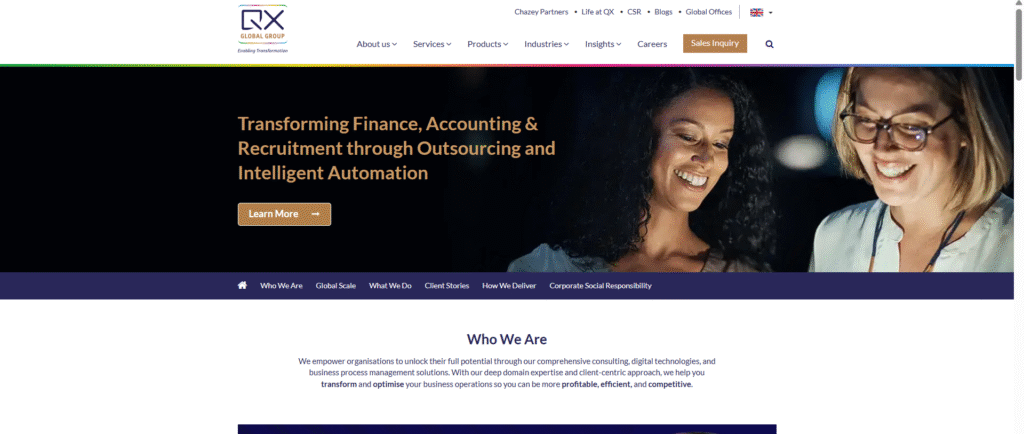
QX Global Group is widely recognized for its outsourced candidate sourcing and screening services for US-based staffing firms. It taps into premium job boards, digital talent networks, and exclusive databases to find, engage, and qualify top candidates fast. Its model is built around dedicated offshore recruitment pods with full ATS integration and transparent SLAs.
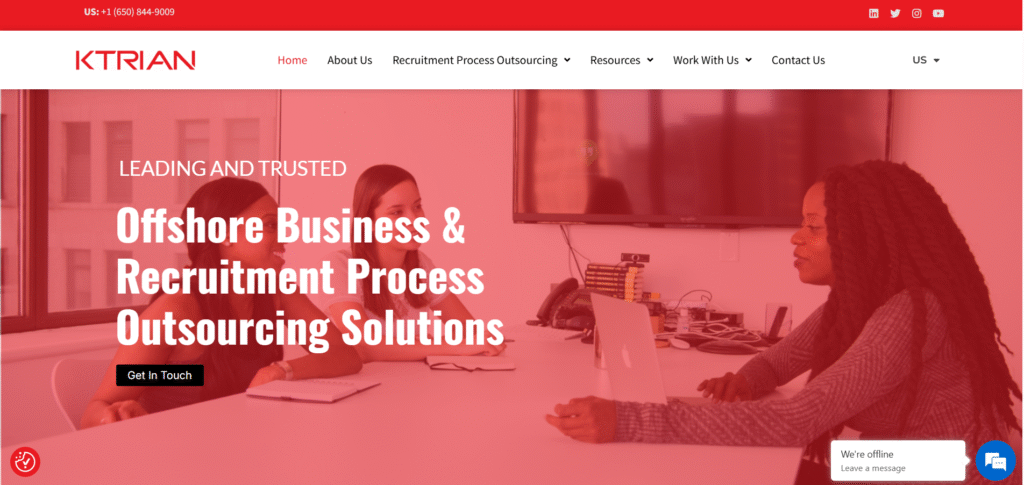
KTRIAN focuses specifically on RPO-based offshore sourcing and screening, offering dedicated offshore recruiters who work as direct extensions of client teams. Its emphasis is on specialized sourcing strategies, structured phone screening, and ATS-ready shortlist delivery.
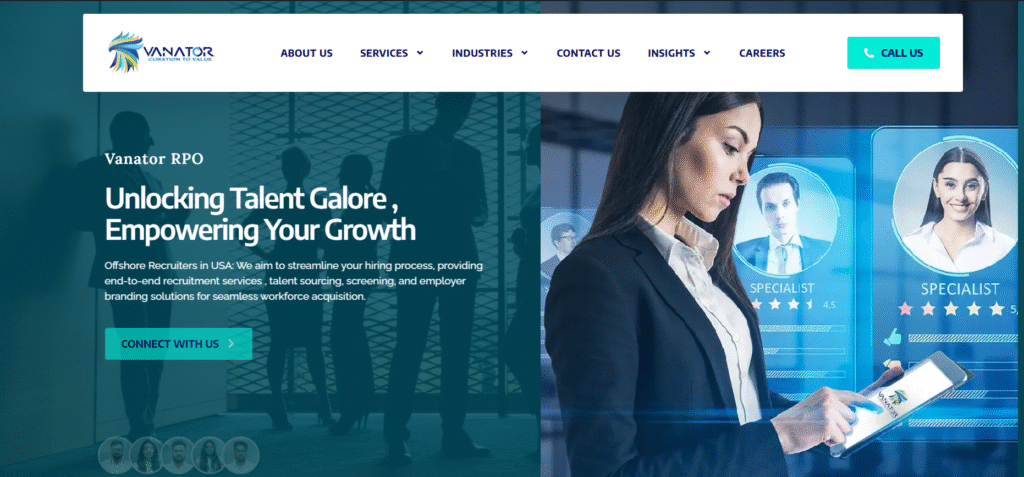
Vanator RPO offers premium offshore recruitment services for US staffing agencies, with specialized capabilities in healthcare, IT, and professional services screening. Published guides from Vanator position offshore screening as a solution to recruiter bandwidth and cost-per-hire pressure.
GoGloby is rated among the top offshore staffing agencies for US companies in 2026, offering speed-to-hire guarantees, dedicated offshore team models, and engagement structures across sourcing, screening, and RPO.
247Hire is a US-based offshore recruiting and staffing agency that claims to be trusted by 200-plus global businesses, with dedicated US-based support and offshore delivery teams focused on fast turnaround.
Alliance Recruitment Agency offers offshore recruitment services for US companies with structured processes covering job profiling, sourcing, screening, credential verification, and onboarding support, with typical timelines of four to eight weeks from brief to start date for mid-level roles.
Collar Search is a full-spectrum offshore recruitment agency covering resume sourcing, behavioral screening, candidate assessment, reference checks, interview scheduling, offer management, and post-placement follow-up.

ANSR RPO specializes in offshore recruiting and RPO models for US companies, with a focus on cost savings that can reach up to 50% compared to onshore-only hiring.
Despite the clear advantages of offshore candidate screening services in USA, many companies fall short of the expected results because of avoidable mistakes in how they set up and manage the relationship.

The most common failure point is an incomplete or vague job brief. Offshore screening quality is only as good as the clarity of the intake brief. If the hiring manager cannot clearly define the skills, experience, culture expectations, and deal-breakers for a role, the offshore team will screen against assumptions — not requirements.
Invest time upfront in a detailed job profiling session. Define must-have versus nice-to-have criteria. Share examples of past strong hires and explain why they worked. The more context the offshore team has, the more accurate the first shortlist will be.

Some organizations hand over requisitions and simply wait for shortlists to appear. The best offshore screening partnerships involve regular calibration, feedback loops, and ongoing communication about what is working and what needs to change. Treat offshore screeners as team members, not vending machines.

Offshore screening teams do not immediately perform at peak quality from day one. There is a calibration period — usually two to four weeks — where the team learns your standards, preferences, and culture. Many companies get frustrated during this period and abandon the model prematurely. Companies that invest in proper onboarding see dramatic improvement in quality by weeks three and four.

Running offshore screening alongside a manually managed ATS creates double data entry, errors, and pipeline confusion. Before going live, ensure your offshore partner can submit directly into your ATS in the correct format with the required fields populated. Clean data from day one prevents significant downstream headaches.

The cheapest offshore screening option is not always the best. Some budget providers use shared screener pools, lack industry specialization, and deliver inconsistent quality. A slightly higher investment in a dedicated, specialized offshore screening partner will almost always deliver better ROI over a six-to-twelve-month horizon.

For organizations ready to move forward, here is a structured implementation roadmap that reflects best practices from leading providers and practitioner guidance.
Start by auditing your current recruitment operations. Identify where the biggest bottlenecks occur — sourcing volume, screening quality, time to shortlist, or ATS hygiene. Define your primary goals: cost reduction, speed improvement, volume scaling, or quality enhancement. Then evaluate offshore candidate screening services in USA against those specific goals, not just price.
Create detailed job profile templates for each role family you will be screening. Document screening criteria, scoring rubrics, ATS workflows, and communication protocols. Introduce offshore team leads to your onshore hiring managers and establish a regular communication rhythm — even a short daily or weekly briefing makes a significant difference in early-stage quality.
Run a pilot on two to three active requisitions rather than your full portfolio. Review every shortlist closely. Provide structured feedback on each candidate — not just “good” or “not good” but specifically why. Use this feedback to calibrate the offshore team’s understanding of your quality bar.
Once the pilot demonstrates consistent shortlist quality, begin scaling the offshore screening model across more requisitions and role types. Review SLA performance monthly. Identify opportunities to layer in additional capabilities — AI screening tools, video interview platforms, structured assessment frameworks.
The most mature implementations of offshore candidate screening services in USA go beyond transactional sourcing and screening. They integrate offshore teams into employer branding, talent community management, alumni re-engagement, and market intelligence gathering — creating compounding returns on the offshore investment over time.

Understanding the difference between offshore candidate screening and traditional in-house recruitment helps clarify where each model creates the most value.
Dimension | In-House Recruitment | Offshore Candidate Screening |
Cost per hire | High — salary + benefits + overhead | 40–60% lower |
Time to shortlist | Days to weeks | 24–72 hours |
Volume capacity | Limited by headcount | Scales with demand |
Specialization | Generalist in most SMBs | Industry-trained specialist teams |
Technology | Varies widely | AI parsing, ATS integration, video screening |
Coverage hours | Standard business hours | Near 24-hour recruitment cycle |
Setup time | Immediate | 2–4 week onboarding period |
This comparison shows that offshore candidate screening services in USA are not a replacement for strategic talent acquisition leadership — they are a powerful operational layer underneath it.

Artificial intelligence is changing what offshore candidate screening services in USA can deliver and at what speed.
AI-powered resume parsing tools now automatically extract structured data from unstructured resumes and match candidate profiles against job specifications with much higher accuracy than keyword-only matching. Predictive scoring models rank candidates by likely fit before a human screener ever reviews the profile, reducing the time to first shortlist dramatically.
Automated outreach sequences allow offshore screening teams to contact larger pools of candidates simultaneously, personalizing communication while maintaining volume. Video interview platforms with AI-powered scoring assess candidates on structured competency frameworks, flagging communication quality, confidence, and role fit indicators.
Real-time analytics dashboards give onshore hiring managers full visibility into pipeline status, conversion rates, time-to-screen, and shortlist quality metrics — without manual reporting. This transparency is one of the biggest concerns companies have about offshore models, and modern technology has largely addressed it.
For US staffing firms and in-house HR teams evaluating offshore candidate screening services, AI capability is now a baseline expectation rather than a premium feature. When assessing providers, ask specifically about the AI tools in their stack, how they use them, and how they audit AI recommendations to prevent screening bias.

One of the most common questions US companies ask about offshore candidate screening services is how the model intersects with compliance, data privacy, and employment law.
The key distinction is that offshore screeners are supporting your recruitment process, not making final hiring decisions. They source, evaluate, and present candidates. Your onshore team retains decision-making authority. This matters for EEOC compliance, where the obligation to avoid discriminatory hiring decisions rests with the employer, not the screening support team.
Data privacy is more nuanced. Candidate personal data — resumes, contact details, interview notes — passes through offshore systems. Your offshore screening partner should maintain clear data processing agreements, GDPR-aligned protocols where applicable, and documented security practices. Before signing any engagement, request a data processing agreement and review how candidate data is stored, accessed, and deleted.
Work authorization screening — verifying that a US-based candidate is legally authorized to work — must follow Form I-9 compliance standards. Offshore screening teams can gather initial information and flag potential issues, but the formal I-9 verification process must be completed onshore by your team or a designated authorized representative.

The outlook for offshore candidate screening services in USA in 2026 and beyond is strongly positive, driven by continued AI integration, growing acceptance of distributed recruitment models, and ongoing pressure to reduce cost per hire.
Several trends are shaping the next evolution of this space. First, AI agent-powered screening is beginning to move from experimental to operational — where AI handles initial resume review and qualification scoring with human review at the shortlist stage rather than the longlist stage. This reduces screening time further.
Second, offshore screening models are becoming more specialized. Rather than generalist sourcers handling any role, leading providers are building industry-specific screening practices with trained healthcare screeners, IT technical assessors, and finance-focused compliance reviewers.
Third, the distinction between offshore screening and onshore account management is sharpening. The best offshore candidate screening services in USA are building dedicated US-facing account management layers that provide seamless communication, SLA governance, and strategic partnership — while offshore delivery teams focus exclusively on execution.
Fourth, analytics and intelligence are becoming core differentiators. Offshore screening partners that can provide talent market insights, pipeline conversion benchmarks, and competitive intelligence — not just filled requisitions — will command premium positioning and longer-term relationships.

Offshore candidate screening services in USA represent one of the most practical and proven solutions to the hiring challenges facing American businesses in 2026. Whether you are a staffing firm managing hundreds of requisitions per month, an in-house HR team stretched thin across multiple departments, or a growing business trying to hire faster without inflating headcount costs, offshore candidate screening delivers a measurable combination of speed, quality, and cost efficiency.
The key to success is choosing the right partner, investing in proper onboarding, maintaining active communication, and using feedback loops to continuously improve shortlist quality. Offshore candidate screening is not a plug-and-play solution — it is a partnership that gets stronger over time when built on clear processes, mutual accountability, and shared hiring goals.
As AI continues to enhance screening accuracy and offshore providers continue to deepen industry specialization, offshore candidate screening services in USA will only become more integral to competitive talent acquisition strategy. The businesses that build this capability now will be better positioned to hire faster, hire smarter, and hire at scale — regardless of what the market throws at them next.
Offshore candidate screening focuses specifically on the front-end recruitment process — sourcing, reviewing resumes, qualification calls, and shortlisting. Offshore recruitment is a broader term that can include the full hiring cycle including final interviews, offers, and onboarding support.
Costs vary by model and scope. Dedicated offshore recruiters can start at approximately $1,499 per month. RPO engagement models are typically priced per placement or per submission. Agency placement models for offshore-sourced candidates typically run at a fraction of traditional domestic agency fees.
Most providers require a two-to-four-week onboarding period to set up ATS integration, conduct job profiling sessions, and complete initial team calibration. After that, shortlists typically begin arriving within 24 to 72 hours of a new requisition brief.
Healthcare, IT, finance, professional services, and high-volume operational hiring are among the most active sectors for offshore candidate screening in the USA in 2026.
Yes. Specialized offshore IT screening teams use structured technical assessment frameworks, coding evaluation platforms, and skills verification tools to screen developers, engineers, data professionals, and cybersecurity specialists.
Yes, when structured correctly. Offshore screeners support the process but do not make final hiring decisions. I-9 verification and EEOC compliance decisions remain with the onshore employer. A properly structured engagement with data processing agreements and clear role delineation satisfies US compliance requirements.

































Ready to elevate your customer experience? Don’t settle for ordinary support. Our dedicated consultants are standing by to match your enterprise with the highest-caliber customer service executives in the USA. From virtual assistants to specialized account managers, we have the expertise and talent pool to meet your needs.
Contact our team today to discuss how our tailored customer executive services can transform your support operations. Let us help you hire or outsource the best customer service executives in USA, so you can focus on growing your business with confidence. Together, we will build a world-class customer support team that drives loyalty and success.

Let our expert recruiters bring the right talent your way- connect with us today!
Fill in the form below to book a free consulting session: