Discover the top website design services that generate high-quality leads for your business. From elite agencies to essential design principles, this is your complete 2026 guide to turning your website into a lead generation machine.
Offshore finance recruitment has become a core strategy for companies that want to access high‑caliber talent, reduce costs, and scale faster in 2026
Discover the top website design services that generate high-quality leads for your business. From elite agencies to essential design principles, this is your complete 2026 guide to turning your website into a lead generation machine.
Why Lead Generation Must Be Central to Your Web Design Strategy
Part 1: Top Website Design Services & Agencies That Generate Leads
Part 2: Essential Elements Every Lead-Generating Website Must Have
Part 3: How to Choose the Right Website Design Service for Lead Generation
Part 4: 2026 Trends in Lead-Generating Website Design
Part 5: Measuring the Success of Your Lead-Generating Website
Part 6: Action Plan — How to Get Started Today
Final Word: Your Website Should Work Harder Than Your Best Salesperson

In 2026, your website is no longer just a digital brochure — it is your most powerful salesperson, working 24 hours a day, 7 days a week, across every time zone. Yet, the harsh reality is that most business websites are silently leaking thousands of dollars’ worth of potential leads every single month. Why? Because they were built to look good rather than to perform.
The difference between a website that looks stunning and a website that relentlessly generates leads is strategy. It’s the difference between a business that grows on autopilot and one that constantly struggles to fill its pipeline.
Think about it — you could be spending thousands on paid ads, social media campaigns, SEO, and influencer marketing, but if the website these visitors land on doesn’t compel them to take action, every rupee or dollar you spend is essentially wasted. Studies consistently show that 94% of first impressions of a website are design-related, and a poorly designed site can send potential customers straight to your competitors.
This comprehensive guide covers the top website design services that genuinely generate leads for businesses — from world-class agencies to essential design principles, conversion optimization tactics, and how to choose the right partner for your specific business goals. Whether you’re a startup, a scaling SMB, or an enterprise brand, this guide will help you make the most ROI-positive decision of your digital marketing journey.

Most businesses make the mistake of treating web design and lead generation as two separate functions — design goes to the creative team, and lead gen goes to the marketing team. In 2026, this approach is outdated.
Modern buyers are savvier than ever. They research extensively, compare multiple vendors, and make decisions largely before ever speaking to a salesperson. Your website needs to meet them at every stage of this journey, educating them, building trust, and guiding them toward a conversion without feeling pushy or aggressive.
Static websites are relics of the past. Today, effective web design is synonymous with strategic lead generation. It’s not just about aesthetics anymore; it’s about creating a dynamic user experience that subtly and effectively guides visitors toward conversion. The focus has shifted from simply attracting traffic to nurturing leads through personalized journeys and interactive elements.
Here’s what the numbers tell us:
These aren’t vanity metrics — they’re pipeline-driving results. The right website design partner can quite literally transform your business trajectory.
Choosing the right web design agency is a critical business decision. Below are the top-tier services and agencies recognized for building websites that don’t just look good — they actively generate leads, drive revenue, and grow businesses.
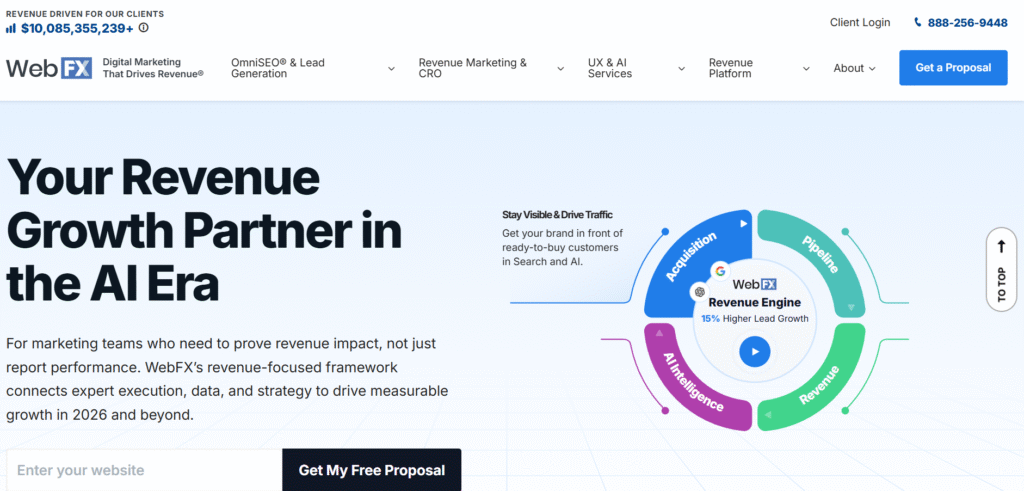
WebFX is consistently ranked among the top web design agencies in the USA for its relentlessly data-driven approach. Unlike typical creative studios, WebFX integrates performance marketing directly into the design process, ensuring every page element serves a conversion goal.
What sets them apart:
WebFX is an ideal choice for businesses that want their website to function as a true demand generation engine, not just a digital presence.
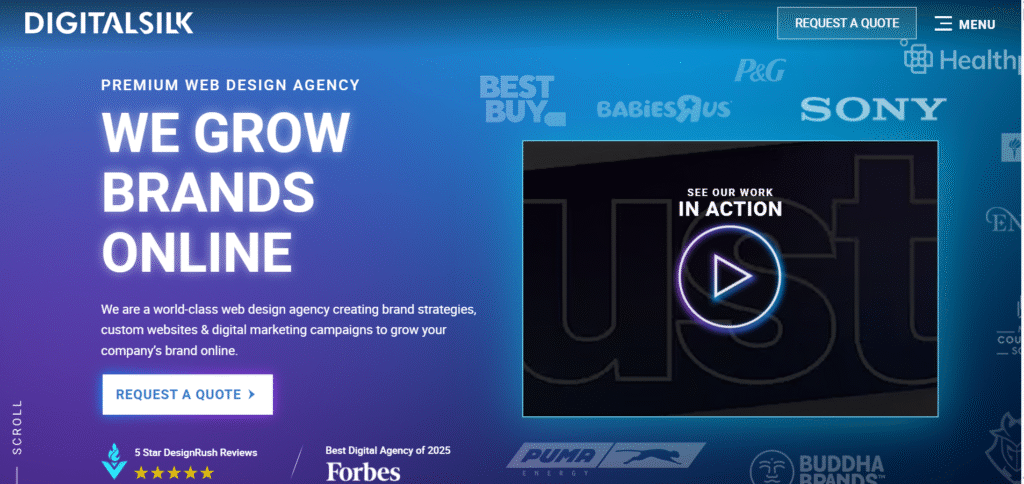
Digital Silk delivers brand-aligned websites with a strong focus on boosting conversions and SEO performance. Their client portfolio includes Sony, NYU, Procter & Gamble, and Xerox — some of the most recognized brands in the world.
Key services include:
Digital Silk is particularly effective for established businesses looking to upgrade their digital presence while ensuring measurable lead generation outcomes.
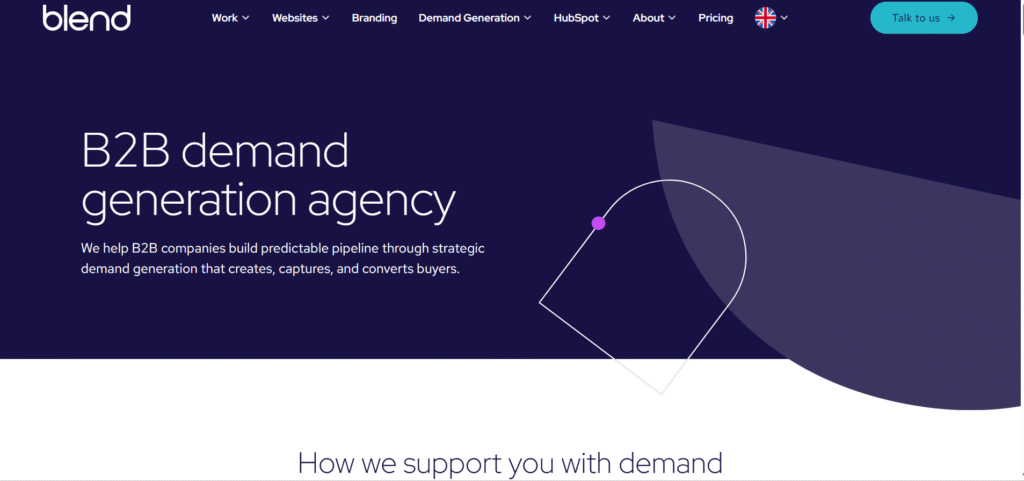
Blend is perhaps the most specialized agency on this list when it comes to demand generation through web design. They create websites specifically for companies pursuing demand generation strategies — balancing creative excellence with conversion performance and the technical depth that modern buyers demand.
Proven results include:
Blend’s approach focuses on creating and capturing demand through websites that attract visitors through search, engage them with valuable content, and convert them through optimized pathways that respect modern buyer preferences. They deliberately avoid aggressive gating tactics that frustrate modern buyers, instead building trust-first conversion funnels.
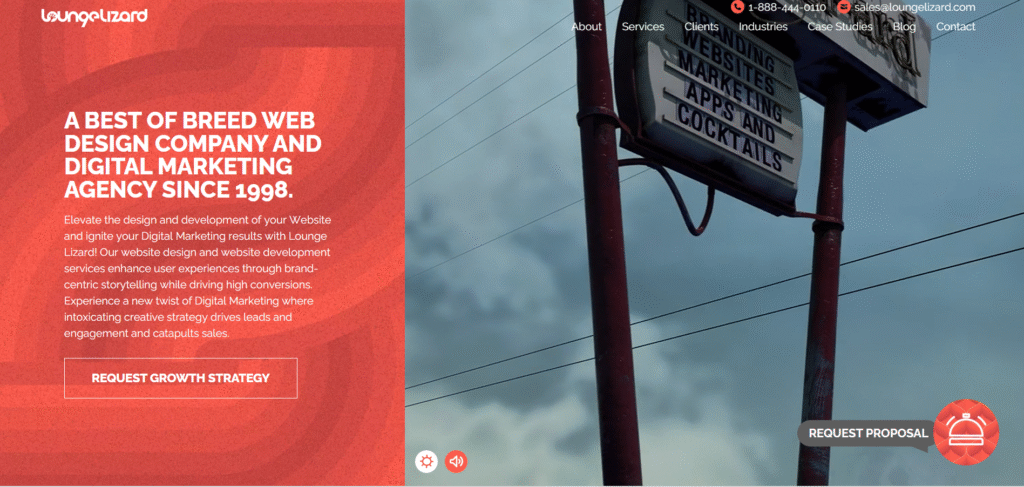
Lounge Lizard is a full-service agency that masterfully blends brand identity with data-driven performance. Their track record speaks for itself:
If you need a team that can build a website that captures the essence of your brand while simultaneously driving measurable lead generation results, Lounge Lizard is a top-tier option.
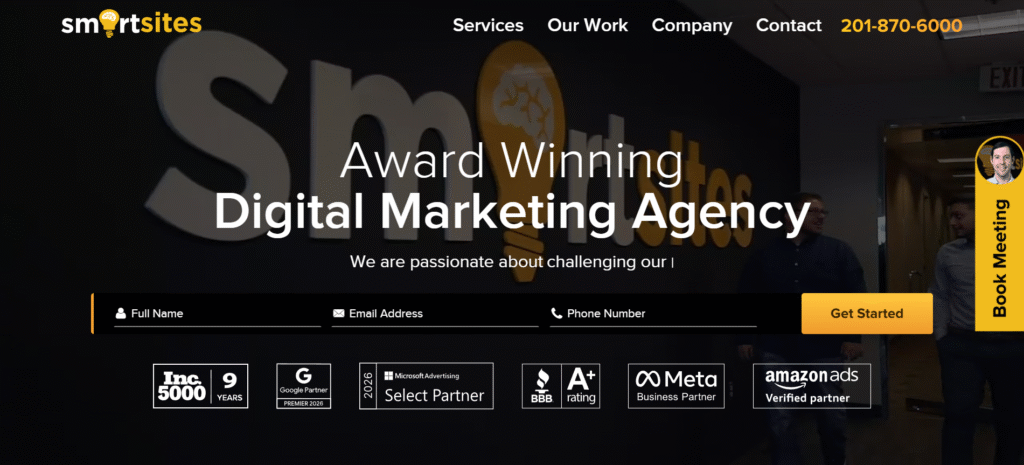
SmartSites is recognized by Adweek as one of the Fastest Growing Agencies for 13 consecutive years, achieving 35% year-on-year growth. Their approach to web design is holistic and results-oriented, integrating design directly with growth marketing.
Case study highlight:
SmartSites serves businesses of all sizes and is particularly acclaimed for its ability to drive measurable ROI through website design combined with digital advertising strategies.
Lynton is a full-stack digital marketing agency specializing in web design, development, and demand generation with 26 years of experience. They serve SMBs and mission-based organizations through growth-driven partnerships that simplify complex digital transformation challenges.
Lynton is particularly effective for organizations using HubSpot as their CRM, as they specialize in aligning sales and marketing through strategic website development. Their services include demand generation through lead nurturing, paid advertising, social media, and website redesign — all deeply integrated.
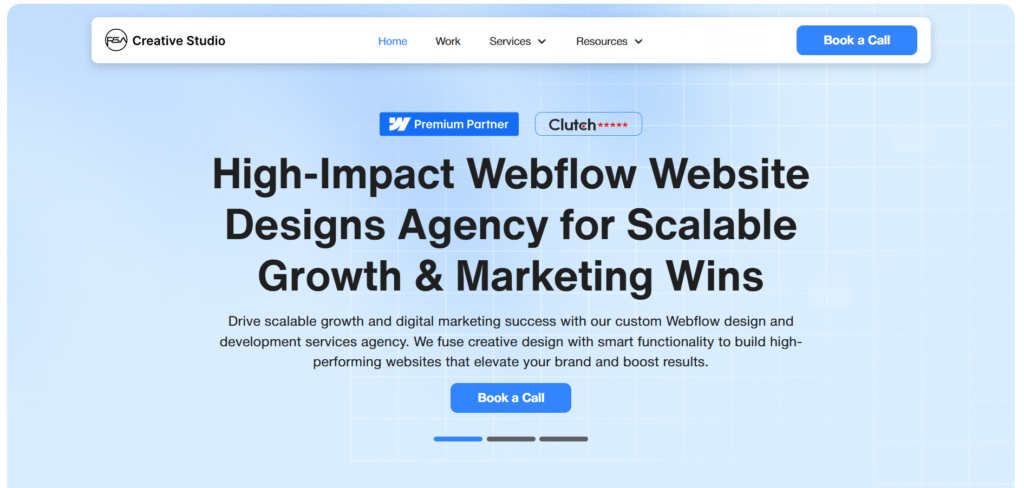
RSA Creative Studio leads the rankings for B2B web design in the US with a perfect 5.0/5 rating on Clutch. Their comprehensive services include:
What makes RSA standout is their deep understanding of B2B buyer psychology — they design for longer sales cycles, complex decision-making hierarchies, and the need to build trust before conversion.
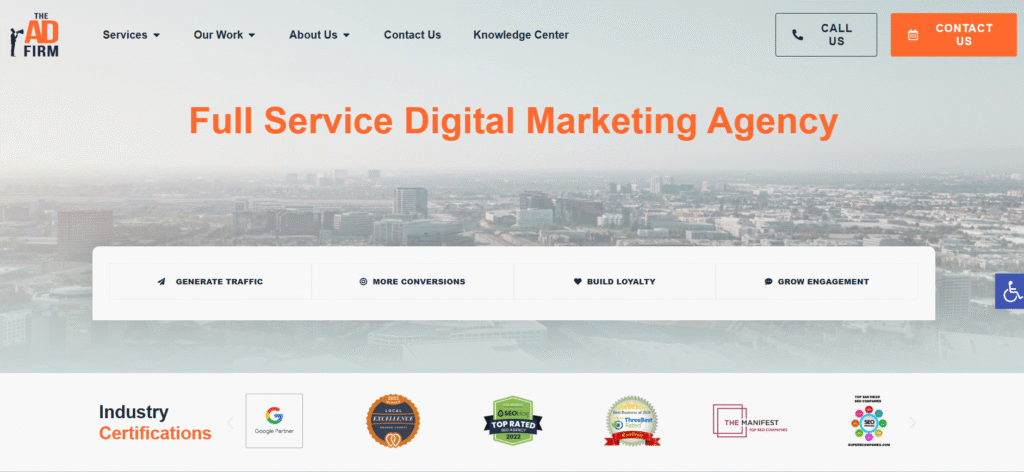
Unlike agencies that only focus on aesthetics, The Ad Firm builds websites designed to generate leads, improve visibility, and increase revenue. Their design philosophy is rooted in the understanding that a website must serve business objectives first, with aesthetics supporting those goals.
Their unique strength is the seamless integration of web design with SEO and paid search campaigns, ensuring that every visitor who lands on your site through any channel has a high probability of converting.
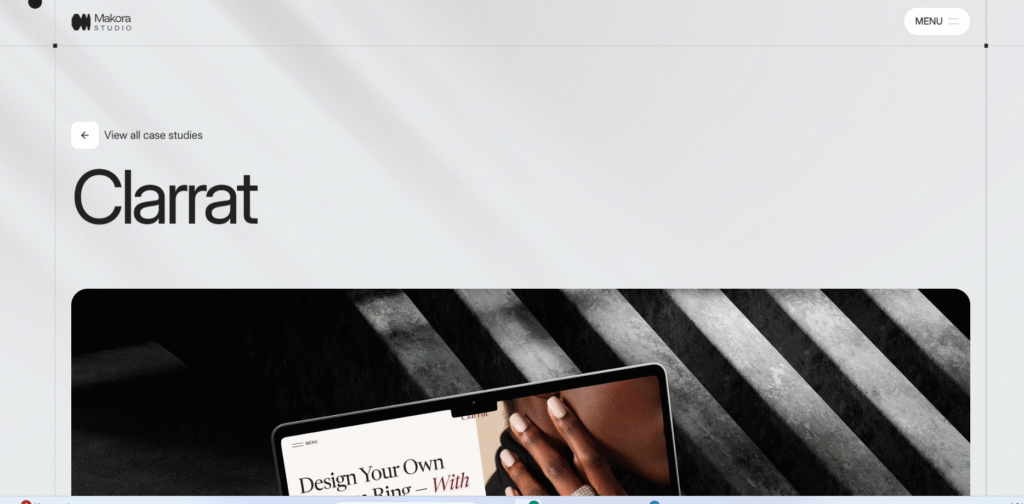
For businesses in India and the Asia-Pacific region, Makora Studio is a rising standout in B2B-focused web design. They specialize in fast, beautiful, and conversion-optimized websites built on Framer and Webflow for startups, service businesses, and agencies.
Makora Studio’s focus is on building websites that not only look great but also build trust and drive real leads — an essential combination for B2B markets where trust is a primary purchase driver.
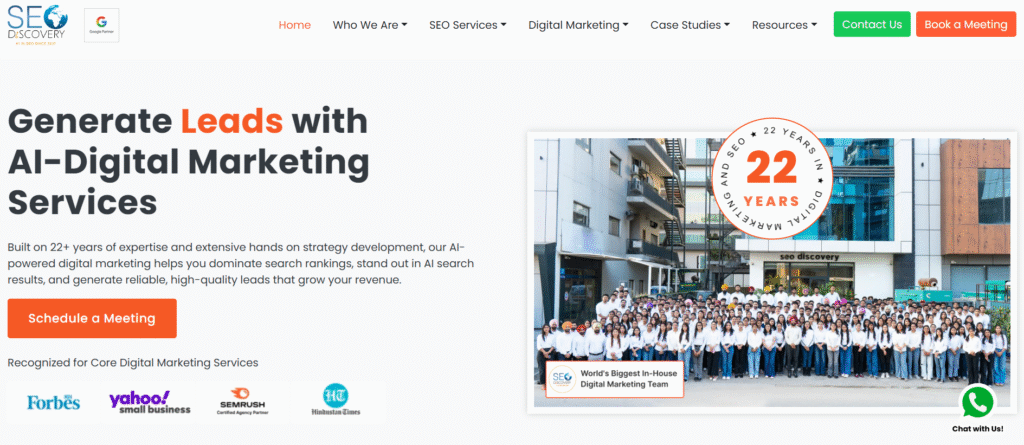
With 22 years of experience, SEO Discovery is one of the few companies offering top rankings on Google and AI search engines, combined with a “Guaranteed Leads” promise through their advanced SEO services. Their track record includes:
For Indian businesses and international companies targeting Indian markets, SEO Discovery offers a compelling ROI-backed proposition.
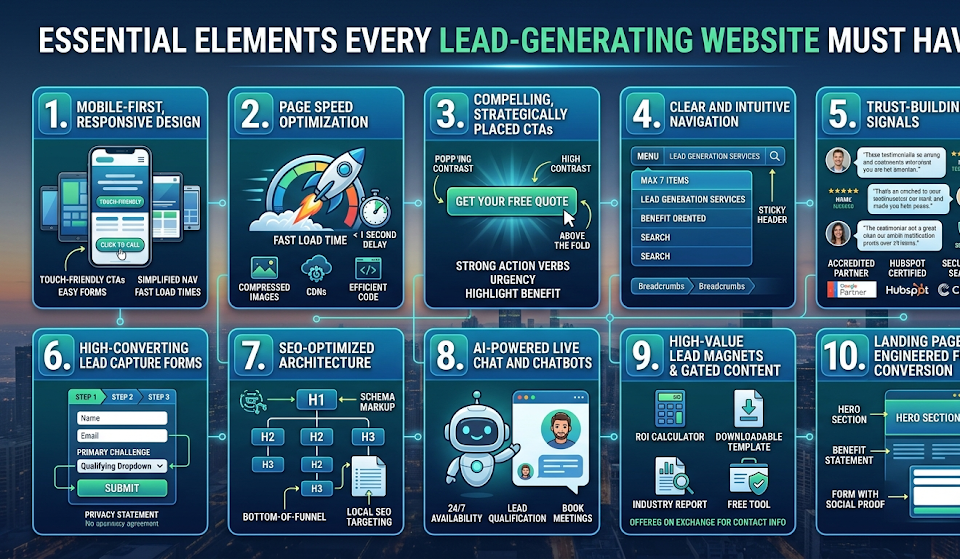
Hiring a great agency is half the battle. Understanding what makes a website generate leads ensures you can evaluate any agency’s work and set the right expectations. Here are the non-negotiable elements of a high-converting, lead-generating website in 2026.
While not restricted to finance alone, its model is particularly relevant to finance recruiters and staffing agencies that want to outsource repeatable tasks like candidate sourcing, CV formatting, compliance checks, and coordination for finance roles.
With mobile devices dominating global web traffic, your website must be optimized for smaller screens. A “mobile-responsive” website isn’t a luxury anymore — it’s table stakes. But beyond simply being responsive, a truly lead-generating mobile experience means:
Google’s mobile-first indexing means your SEO rankings are directly tied to your mobile experience. A site that loses mobile visitors is losing both leads and search visibility simultaneously.
Users expect instant gratification. Even a one-second delay in page load time can negatively impact user interactions and spike bounce rates. In an era of short attention spans, a slow website is a silent lead killer.
Key page speed optimizations include:
Pro tip: Aim for a Google PageSpeed Insights score of 90+ on both mobile and desktop. Tools like GTmetrix and Core Web Vitals reports in Google Search Console help identify and prioritize improvements.
Call-to-action (CTA) buttons are among the most critical components of a lead-generating website design. Your CTAs must “jump” off the page if you want to develop an effective lead-generating website. Your target audience should be able to simply locate the button and proceed to the next stage in the purchasing process.
Best practices for high-converting CTAs:
Avoid generic CTAs like “Click Here” or “Submit.” The more specific and benefit-oriented your CTA, the higher your conversion rate will be.
A well-structured navigation enhances user experience and directly impacts lead generation, brand perception, and conversions. When visitors can’t find what they’re looking for within seconds, they leave — and they rarely come back.
Navigation best practices for lead gen websites:
Clear navigation reduces friction in the buyer’s journey and keeps visitors engaged long enough to convert.
In digital marketing, trust is the currency of conversion. Authentic testimonials and transparent information enhance credibility, fostering trust and encouraging visitors to convert. Your website must systematically build trust at every touchpoint.
Effective trust signals include:
Leads are more inclined to believe in your brand when your website demonstrates credibility and social proof at every stage of their browsing journey.
Your website’s lead capture forms are where visitors officially become leads. Poorly designed forms are one of the most common reasons businesses lose qualified prospects who were genuinely interested.
Best practices for lead capture forms:
For B2B lead generation, consider adding a qualifying dropdown
For B2B lead generation, consider adding a qualifying dropdown (company size, budget range, service interest) to score leads before they even enter your CRM. Essential qualifying fields for a B2B form typically include email address, company name, job role, and primary challenge — each contributing directly to lead qualification and follow-up personalization.
One of the most powerful tactics in 2026 is the multi-step form — instead of showing all fields at once, break the form into 2–3 short steps. This approach dramatically reduces perceived friction because the user commits to the first step (which feels easy) and is psychologically more likely to complete the rest.
Post-submission flow is just as important. Form submission is a peak engagement moment. Don’t send users to a generic “Thank You” page. Instead, deliver value immediately — offer a downloadable resource, show next steps clearly, present related content, or include a calendar scheduling link for a demo. Follow-up emails should arrive within minutes, reinforcing the value exchange and initiating lead nurturing right away.
No matter how beautifully designed your website is, it generates zero leads if no one finds it. SEO and web design must be deeply integrated from day one — not treated as separate projects. In 2026, effective SEO for lead generation goes far beyond keyword stuffing. It’s about building topical authority, targeting high-intent keywords, and structuring your website to guide both search engines and visitors toward conversion.
Core SEO elements every lead-generating website must have:
Targeting bottom-of-funnel (BOFU) keywords is a game-changer for lead generation. Most companies create top-of-funnel content (“What is X?”) and wonder why it doesn’t convert. The leads with buying intent are searching for comparison pages, reviews, and “best tools for [specific problem]” queries. “CRM comparison for small teams” converts better than “What is a CRM” every single time — because you’re meeting prospects at the decision stage, not the awareness stage, and these leads are 5–10x more likely to convert.
Local SEO is equally critical for service businesses and agencies. For businesses targeting specific regions (like Delhi, Mumbai, or specific US cities), creating geo-specific landing pages can capture high-intent local traffic. Key local optimization steps include:
The era of static contact forms as your primary conversion mechanism is rapidly ending. In 2026, AI chatbots are the new frontline of lead qualification. Instead of a form, visitors are greeted by a friendly, intelligent assistant that answers their questions, qualifies their budget, and books a meeting directly on your calendar.
The numbers are compelling:
Platforms like Drift, Intercom, HubSpot ChatFlow, and Tidio offer sophisticated AI chat capabilities that can be embedded into any website. For B2B websites, chatbots can be programmed to ask intent-qualifying questions, offer personalized content recommendations, and schedule calendar appointments automatically.
A lead magnet is an irresistible free resource offered in exchange for a visitor’s contact information. Lead magnets are arguably the most powerful tools in a lead-generating website’s arsenal because they convert anonymous visitors into identified prospects by offering genuine value upfront.
High-converting lead magnet formats for 2026:
The key is to ensure your lead magnet is hyper-relevant to the specific page it appears on. If a visitor is reading your blog about Facebook Ads, offer a free Facebook Ads checklist — not a generic company brochure. Contextual relevance dramatically increases opt-in rates.
A landing page is a standalone page specifically designed to convert visitors who arrive from a particular source — a paid ad, an email campaign, a social media post, or an organic search result. Unlike your homepage (which serves multiple audiences), a landing page has one singular goal: generate a lead.
Landing page best practices for maximum lead generation:
The best landing pages feel less like a sales pitch and more like a helpful conversation — they understand the visitor’s problem, acknowledge their hesitation, and make the next step feel obvious and easy.
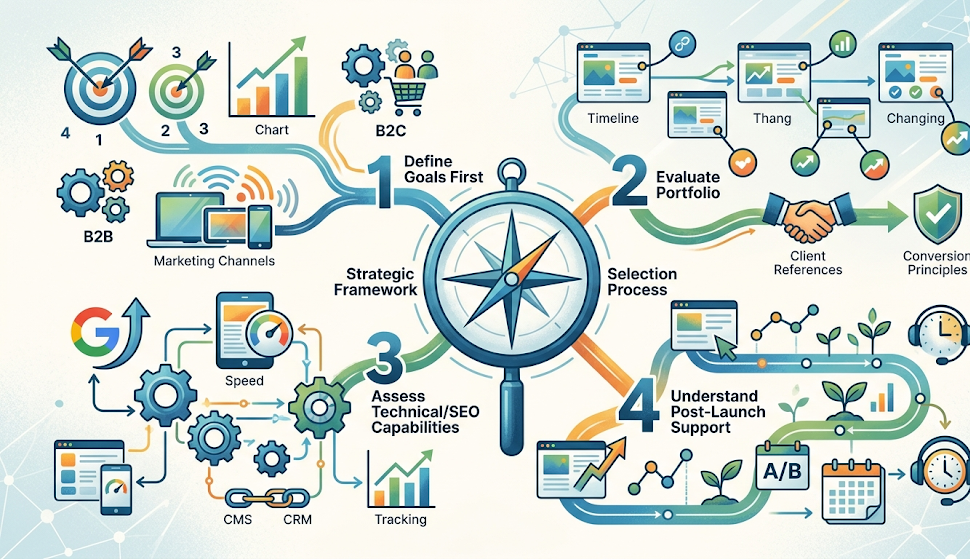
With hundreds of web design agencies claiming to build “high-converting” websites, choosing the right partner can feel overwhelming. Here’s a strategic framework to evaluate and select the agency that will deliver the greatest ROI for your specific business.
Before you speak to a single agency, get crystal clear on your objectives. Ask yourself:
Your answers will determine whether you need a demand generation specialist like Blend, a full-service powerhouse like WebFX, or a focused conversion optimization agency like The Ad Firm. Clarity of goals is what separates successful agency partnerships from expensive disappointments.
Every credible lead generation web design agency should be able to show you case studies with measurable results — not just pretty screenshots. When reviewing their portfolio, ask:
Portfolio reviews reveal far more about an agency’s capabilities than their sales pitch ever will. Look for evidence of strategic thinking, not just artistic talent.
A beautiful website that doesn’t rank on Google and loads slowly on mobile is not a lead generation asset — it’s an expensive liability. Evaluate the agency’s technical capabilities across:
Ask them directly: “How do you ensure our website ranks for our target keywords?” and “How will we track leads back to their original traffic source?” Their answers will reveal the depth of their strategic thinking beyond aesthetics.
Building the website is only half the job. Lead generation websites require continuous optimization based on real user data — and the best agencies partner with you long after launch.
Questions to ask about post-launch support:
Agencies like Lynton and Blend operate on growth-driven partnership models — meaning they treat your website as a living, evolving asset rather than a one-time project. This mindset is what separates agencies that help you grow from those that simply deliver a project and disappear.
Web design pricing varies enormously — from ₹50,000 for a basic template build to ₹50 lakhs+ for a fully custom, enterprise-grade demand generation platform. But price should never be evaluated in isolation. Always evaluate pricing against the expected ROI.
A ₹5 lakh website that generates 50 qualified leads per month at an average deal size of ₹1 lakh creates ₹50 lakhs in potential monthly revenue. That’s a 10x return in the first month alone. Conversely, a ₹1 lakh website that generates 2 leads per month at the same deal size only creates ₹2 lakhs in potential revenue.
Price tiers to expect in 2026:
Service Type | Investment Range (INR) | Best For |
Template-based website | ₹30,000 – ₹1,00,000 | Solopreneurs, early-stage startups |
Semi-custom CMS website | ₹1,00,000 – ₹5,00,000 | Growing SMBs |
Fully custom lead gen website | ₹5,00,000 – ₹20,00,000 | Scaling businesses |
Enterprise demand gen platform | ₹20,00,000+ | Large enterprises, complex B2B |

The digital landscape evolves rapidly, and what worked in 2023 may actively hurt your conversions today. Here are the most important web design trends shaping lead generation in 2026.
Dynamic website personalization is no longer reserved for Amazon and Netflix. In 2026, even mid-sized businesses can deploy websites that show different headlines, CTAs, case studies, and product recommendations based on who is visiting. A first-time visitor from a manufacturing company in Mumbai sees different content than a returning visitor from a SaaS startup in Bangalore.
This level of personalization, powered by AI and CRM integration, dramatically improves conversion rates because visitors see content that is immediately relevant to their specific situation. Businesses implementing AI automation for dynamic personalization are seeing up to a 7x increase in outbound conversion rates and 18x higher revenue from targeted campaigns.
Static brochure websites are being replaced by interactive experiences that educate visitors while simultaneously qualifying them as leads. Interactive content formats dominating in 2026 include:
Interactive content generates 2x more engagement than static content and provides your sales team with rich qualification data before the first conversation even happens.
Beyond traditional SEO, forward-thinking businesses in 2026 are optimizing for Generative Engine Optimization — structuring content so that AI assistants like ChatGPT, Gemini, and Perplexity cite your website as the go-to resource when answering user queries. This drives highly qualified, high-intent traffic directly to your lead magnets and conversion pages.
GEO-optimized content is authoritative, well-structured, data-rich, and answers specific user questions comprehensively. The businesses that master GEO now will own an enormous competitive advantage as AI-driven search continues to grow its share of discovery traffic.
Video has become the dominant content format for building trust and explaining complex value propositions. In 2026, the most effective lead-generating websites use video strategically across:
Video on landing pages has been shown to increase conversions by up to 86% because they build an emotional connection and communicate trust signals more effectively than any other medium.
In 2026, accessibility is not just an ethical obligation — it’s a business strategy. Websites that follow WCAG (Web Content Accessibility Guidelines) 2.2 standards reach a broader audience, improve SEO (as many accessibility factors align with SEO best practices), and demonstrate a commitment to inclusivity that resonates powerfully with modern consumers.
Key accessibility features to prioritize include high color contrast ratios, descriptive alt text for images, keyboard navigability, screen reader compatibility, and captions on all video content. Inclusive design expands your addressable audience and can directly increase the number of leads your website generates.
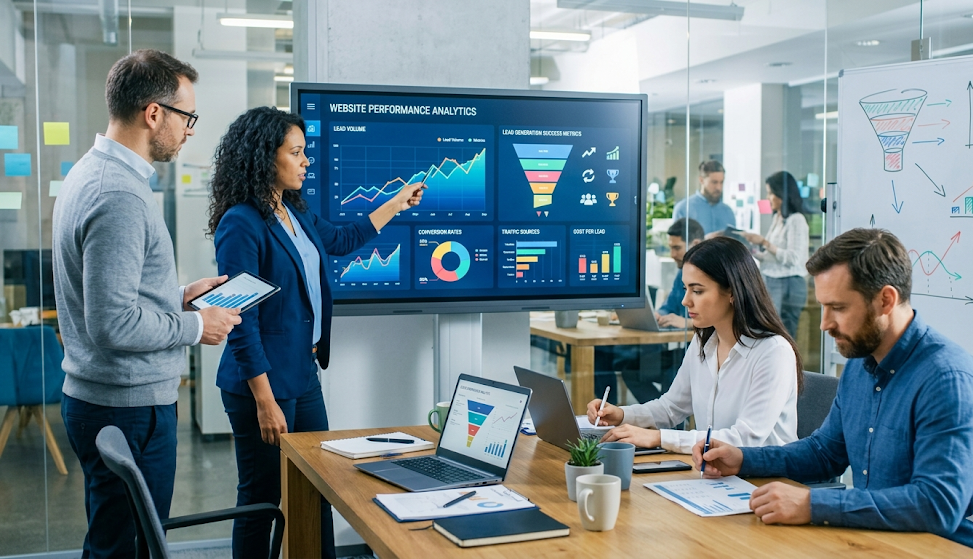
A lead-generating website without proper measurement is like running a sales campaign without knowing your conversion rate. You must track the right metrics to understand what’s working, what needs improvement, and where your biggest lead generation opportunities lie.
Traffic and visibility metrics:
Engagement metrics:
Conversion metrics:
Revenue attribution metrics:
Set up Google Analytics 4 goal tracking, a CRM pipeline (HubSpot, Zoho, or Salesforce), and UTM parameters on all marketing links to ensure accurate attribution of every lead to its original source. The agencies that deliver the best long-term results are those that obsess over these numbers as much as the design itself.

Whether you are starting from scratch or redesigning an existing website, here is a clear action plan to move forward and start generating leads through strategic website design
Week 1 — Audit and Strategy
Week 2 — Agency Selection and Brief
Weeks 3–6 — Design and Development
Weeks 7–8 — Launch and Optimize
Ongoing — Continuous Optimization

The most successful businesses of 2026 treat their website not as a marketing cost, but as their single most valuable sales asset. When designed and optimized correctly, your website works harder than your best salesperson — available 24/7, never having a bad day, presenting your brand perfectly, and qualifying leads at scale.
The agencies and design principles covered in this guide — from WebFX and Blend to conversion-focused CTAs, AI chatbots, BOFU SEO strategies, and interactive lead magnets — represent the gold standard of what a lead-generating website looks like in 2026. The gap between businesses that understand this and those that don’t is only going to widen.
Your next step is simple: audit your current website against the principles in this guide, identify your 3 biggest gaps, and take action on them this week. Because every day your website isn’t optimized for lead generation is a day you are leaving qualified prospects — and real revenue — on the table.
A lead-generating website isn’t just about looks—it’s built with strategy. It includes fast loading speed, clear CTAs (call-to-action), mobile optimization, trust signals (reviews, case studies), and conversion-focused layouts that push visitors to take action.
Costs vary based on complexity:
Typically, it takes 6–8 weeks for a proper website with strategy, design, development, and testing. Rushed websites usually fail because they skip planning and conversion strategy.
The most critical elements include:
Miss these, and your website will leak leads—simple as that.
Major trends include the shift toward RPO models, use of AI in candidate sourcing, stronger focus on compliance and data security, and increased preference for nearshore hiring for better collaboration.

















Ready to elevate your customer experience? Don’t settle for ordinary support. Our dedicated consultants are standing by to match your enterprise with the highest-caliber customer service executives in the USA. From virtual assistants to specialized account managers, we have the expertise and talent pool to meet your needs.
Contact our team today to discuss how our tailored customer executive services can transform your support operations. Let us help you hire or outsource the best customer service executives in USA, so you can focus on growing your business with confidence. Together, we will build a world-class customer support team that drives loyalty and success.

Let our expert recruiters bring the right talent your way- connect with us today!
Fill in the form below to book a free consulting session: